Sign In
Tuesday, Mar 3, 2026
  • العربية
Top Header VOE Logo Header Dark Mode VOE Logo
  • Latest
  • Emirates
  • News
    • Gulf Countries
    • Arab Countries
    • World
  • Politics
    • Analysis
    • Interviews
    • Reports and investigations
  • Business
    • Companies
    • Real Estate
    • Stock Market
    • Green Energy
    • Oil And Gas
    • Bitcoin
    • Business Reports
  • Science and Tech
    • AI
    • Electric Vehicles
    • Space and Mars
  • Sport
  • Society
  • Health
  • Lifestyle
  • Travel and Hotels
Reading: Exclusive | The Mosaic of Iranian Anger: How Do Ethnic and Religious Balances Drive the Protests?
Share
Latest
The US State Department issues an urgent warning to its citizens: “Leave Iran immediately before it’s too late.”
Iranian Football Federation President: We have not yet decided whether to participate in the 2026 World Cup
Israeli army: All options are on the table for a possible ground offensive in Lebanon
Netanyahu: “The fall of the Iranian regime is approaching and the people will soon regain their freedom.”
Trump does not rule out sending US troops to Iran if necessary.
Font ResizerAa
Voice Of EmiratesVoice Of Emirates
  • العربية
  • Latest News
Search
  • News
    • Emirates
    • Gulf Countries
    • Arab Countries
    • World
  • Politics
    • Analysis
    • Interviews
    • Reports and investigations
  • Business
    • Companies
    • Real Estate
    • Stock Market
    • Green Energy
    • Oil And Gas
    • Bitcoin
    • Business Reports
  • Science and Tech
    • AI
    • Electric Vehicles
    • Space and Mars
  • Lifestyle
  • Society
  • Sport
  • Health
  • Travel and Hotels
Have an existing account? Sign In
Follow US
All rights reserved © Voice of Emirates - News service from Our Media Group
AnalysisPolitics

Exclusive | The Mosaic of Iranian Anger: How Do Ethnic and Religious Balances Drive the Protests?

Iran: Cultural and ethnic diversity amidst turmoil

علي رجب
Last updated: 15/01/2026 5:21 pm
Ali Ragab
علي رجب
ByAli Ragab
News Editor
Ali Ragab, editor at Voice of Emirates News Agency, Cairo office, is an Egyptian journalist and poet, a member of the Egyptian Journalists Syndicate, specializing in...
- News Editor
Share
6 Min Read
Exclusive | The Mosaic of Iranian Anger: How Do Ethnic and Religious Balances Drive the Protests?
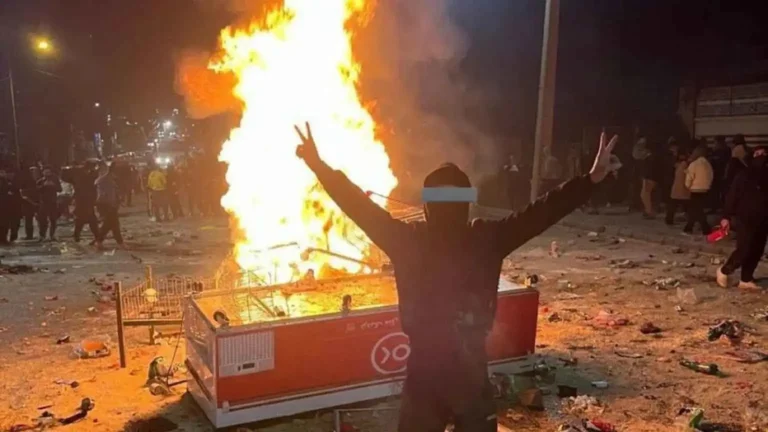
Protests inside Iran (Photo/Archive)
SHARE

Iran, Tehran – A wave of massive demonstrations is sweeping across various regions of Iran. Demands range from radical economic reforms to comprehensive political change. These protests carry exceptional weight in specific areas due to their religious symbolism. They also gain significance because of their influence in the military industries. However, the deeper driving force lies in the complex demographic makeup of the country. This demographic composition has posed an existential challenge to the central regime in Tehran.

Highlights
  • Ethnic map: Persian majority and volatile peripheries
  • Areas “outside development”: Arabs and Baloch
  • Doctrinal contradiction and the rule of the jurist
  • The Revolutionary Guard’s grip in the face of divisions
  • The Sustainability Challenge: Marginalization as Fuel for Revolution

Ethnic map: Persian majority and volatile peripheries

Iran is a country of great cultural and ethnic diversity. Official estimates for 2024 put the population at approximately 85.96 million, while independent estimates place it higher, between 90 and 92 million. This population growth has resulted in a highly complex sectarian and ethnic makeup. Officially declared affiliations often represent “community origins” that do not necessarily reflect personal beliefs, particularly given the persecution faced by atheists and those not officially recognized as such.

Persians (50-60%): They form the backbone of the regime and are concentrated in major cities and the central plateau. Historically a pillar of power, they have recently become a point of vulnerability. Strong opposition voices have emerged among their youth and urban middle class. Azeris (20-25%): The second largest group, numbering around 20 million. Despite their Turkic origins, they are considered pillars of the regime, and the Supreme Leader himself is of Azerbaijani descent on his mother’s side. However, there is simmering discontent due to the marginalization of their language and the dominance of Persian culture. Kurds (7-10%): Concentrated in the west, they represent the historical opposition. Their Sunni faith has led to a consistently tense relationship with Tehran. Frequent uprisings have been met with mass executions and arrests by the regime. Lurs (6%): Concentrated in the west and center, they are characterized by the influence of tribal leaders. They participate in the protests with a noticeable difference between the younger and older generations.

Areas “outside development”: Arabs and Baloch

Arabs (2-3%): They are concentrated in the oil-rich but underdeveloped Ahvaz region. However, a sense of exclusion and discrimination fuels their ongoing protests against central government policies. Baloch (2-4%): They represent the most marginalized group in the southeast of the country. Due to their Sunni identity and their location in the poorest areas, they are subjected to violent institutional repression. Statistics indicate that the Baloch alone accounted for approximately 20% of executions in Iran during 2023. These groups, particularly in Kurdistan and Sistan and Baluchestan, complain of systematic marginalization and deprivation of resources. As a result, their demands have evolved from simply improving living conditions to rights-based and social movements. These movements demand recognition of their identity and political rights.

Doctrinal contradiction and the rule of the jurist

Although Islam unites 99% of Iranians, sectarian divisions pose a security challenge. While 90% adhere to Shi’a Islam, the foundation of the “Guardianship of the Islamic Jurist” system, Sunnis (approximately 10%) constitute a significant bloc in the border regions between the Kurds, Baloch, and Arabs. These minorities face legal and religious restrictions. Meanwhile, the Baha’is (numbering over 300,000) face severe human rights pressures due to their lack of constitutional recognition, alongside the declining numbers of historically significant religious minorities such as Jews, Christians, and Zoroastrians.

The Revolutionary Guard’s grip in the face of divisions

Amid this social upheaval, the Iranian Revolutionary Guard Corps (IRGC) emerges as the primary instrument of central control. Its role extends beyond traditional military operations to include suppressing separatist movements and securing strategic installations.

The regime relies on the IRGC not only to maintain internal stability but also to link its national security to a network of regional militias (Hezbollah and Iraqi factions). Consequently, any disruption to the internal social fabric becomes a direct threat to its regional project.

The Sustainability Challenge: Marginalization as Fuel for Revolution

Field data confirms that ethnic minority areas experience the highest levels of security violence. Demands for change are met with systematic repression. Furthermore, the unequal distribution of resources and power represents a “ticking time bomb” within the Iranian state. A deeper understanding of these dynamics suggests that the current protests are not merely a reaction to transient crises. Rather, they reflect a profound conflict between a “Persian Shiite” centralism and diverse ethnic and religious groups. These groups are demanding their place in the future of Iran.

TAGGED:AmericaIranTrumpUSVoice Of Emirates
SOURCES:Voice Of Emirates
Share This Article
Facebook Whatsapp Whatsapp LinkedIn Telegram Threads Email Copy Link Print
Previous Article The aftermath of Egypt's loss to Senegal: Controversial statements from Hossam Hassan and comments from the Lions of Teranga coach The aftermath of Egypt’s loss to Senegal: Controversial statements from Hossam Hassan and comments from the Lions of Teranga coach
Next Article Iran protests: Heavy death toll and unprecedented crackdown Iran protests: Heavy death toll and unprecedented crackdown

Editor's Pick

The US State Department issues an urgent warning to its citizens: "Leave Iran immediately before it's too late."

The US State Department issues an urgent warning to its citizens: “Leave Iran immediately before it’s too late.”

America issues warnings to its citizens abroad

By
Medhat Elsheikh
1 Min Read
Iranian Football Federation President: We have not yet decided whether to participate in the 2026 World Cup

Tehran, Iran - Iranian Football Federation President Mehdi Taj confirmed that his…

1 Min Read
Israeli army: All options are on the table for a possible ground offensive in Lebanon

Israel and monitoring threats on the border with Lebanon

2 Min Read

Trending

Netanyahu: "The fall of the Iranian regime is approaching and the people will soon regain their freedom."

Netanyahu: “The fall of the Iranian regime is approaching and the people will soon regain their freedom.”

Israel: Analysis of the current Iranian situation

2 hours ago

Trump does not rule out sending US troops to Iran if necessary.

Trump confirms US military readiness for…

2 hours ago

Jordan thwarts Iranian cyberattack on national wheat silos

Jordan strengthens its defenses against cyber…

2 hours ago

Saudi Arabia condemns Iranian attacks on GCC countries and Jordan before the Human Rights Council

Saudi Arabia condemns Iranian attacks on…

3 hours ago

Macron is in contact with the leaders of the UAE, Qatar and Oman regarding Iran and the regional situation.

Macron calls leaders of the UAE,…

3 hours ago

You may also be interested in

During 2025.. Etihad Airways carries 22.4 million passengers
Emirates

During 2025.. Etihad Airways carries 22.4 million passengers

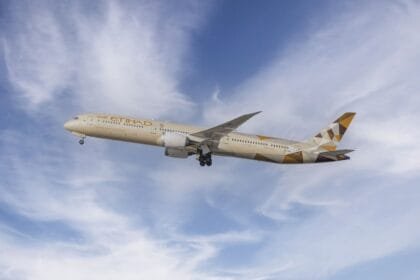
Abu Dhabi, UAE - Etihad Airways carried 22.4 million passengers in 2025, a 21% year-on-year increase. Supported by continued demand…

2 Min Read
Ukraine and France strengthen military partnership and discuss support for air defense systems.
NewsWorld

Ukraine and France strengthen military partnership and discuss support for air defense systems.

Kyiv, Ukraine – Ukraine and France discussed ways to expand military cooperation between the two countries, focusing on strengthening Ukraine's…

2 Min Read
Beijing brandishes force: Military maneuvers send a deterrent message to proponents of "Taiwan independence" and foreign interference.
NewsWorld

Beijing brandishes force: Military maneuvers send a deterrent message to proponents of “Taiwan independence” and foreign interference.

Beijing, China - The Chinese Ministry of Defense asserted that the recent military exercises conducted by the armed forces represent…

2 Min Read
Trends is a strategic partner of the 11th session of the Arab Media Forum in Beirut
Emirates

Trends is a strategic partner of the 11th session of the Arab Media Forum in Beirut

Abu Dhabi, United Arab Emirates - Trends Research and Consulting participates as a strategic partner in the work of the…

3 Min Read
Top Header VOE Logo Header Dark Mode VOE Logo
  • About Us
  • Contact us
  • Advertise with us
  • Media Service Request
  • Privacy Policy
Reading: Exclusive | The Mosaic of Iranian Anger: How Do Ethnic and Religious Balances Drive the Protests?
Share
  • Publishing Principles
  • Ethics Policy
  • Corrections Policy
  • Diversity Policy
  • Actionable Feedback Policy
  • Ownership & Funding
  • Privacy Policy
Reading: Exclusive | The Mosaic of Iranian Anger: How Do Ethnic and Religious Balances Drive the Protests?
Share

All rights reserved © Voice Of Emirates – a news service from Our Media Group

Welcome Back!

Sign in to your account

Username or Email Address
Password

Lost your password?