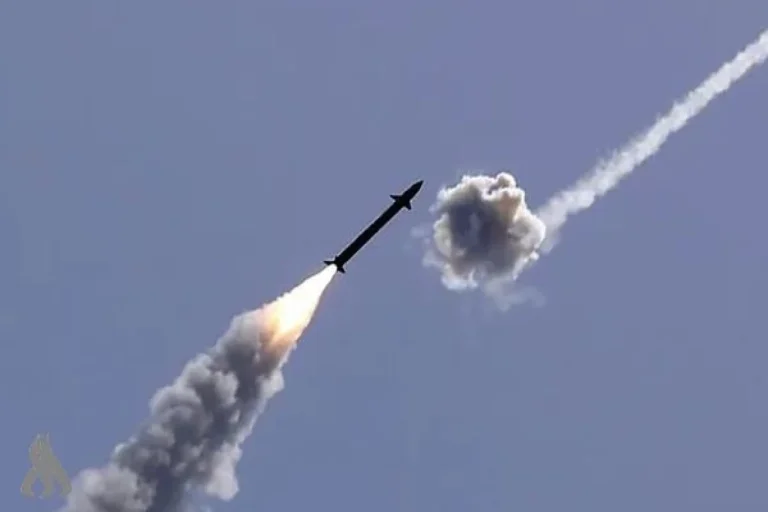
Amman, Jordan – Amid the widening scope of mutual military escalation in the region, the Jordanian Armed Forces announced that their air defenses successfully intercepted and downed three Iranian missiles that breached the Kingdom’s airspace, while a fourth missile fell in a remote area. These developments underscore growing concerns about the spillover effects of the direct military confrontation between Tehran and Washington on the security and stability of neighboring countries.
Missile Interception and Rules of Engagement
The Jordanian military clarified in an official statement that specialized units detected the Iranian missiles as soon as they approached national airspace, dealing with them immediately and decisively in accordance with established military rules of engagement. The statement confirmed that air defenses successfully intercepted three missiles before they could reach any targets, while the fourth fell in an unpopulated, remote area, emphasizing that no casualties or material damage were recorded as a result of the incident. The Armed Forces also reassured citizens that they continue to monitor the airspace around the clock to protect the country’s sovereignty and security.
Military Alert and Heightened Defensive Readiness
As part of precautionary measures, the Jordanian military indicated that air defense units have raised their readiness levels to handle any potential aerial threats that may arise from ongoing regional tensions. Concurrently, relevant security and military agencies have begun investigating the crash site of the fourth missile to conduct necessary sweeps and ensure the absence of any risks or unexploded ordnance, maintaining intensive coordination among various state apparatuses.
Spillover of Regional Escalation: This development casts a heavy shadow over the security landscape in Jordan and neighboring countries, reflecting the expanding impact radius of the escalating crisis between Iran and the United States. With recurring incidents of missile and drone launches being intercepted over the airspace of several regional countries, there are mounting urgent regional and international calls to de-escalate and return to diplomatic tracks, in order to prevent the Middle East from sliding into a large-scale regional confrontation that would be difficult to contain.