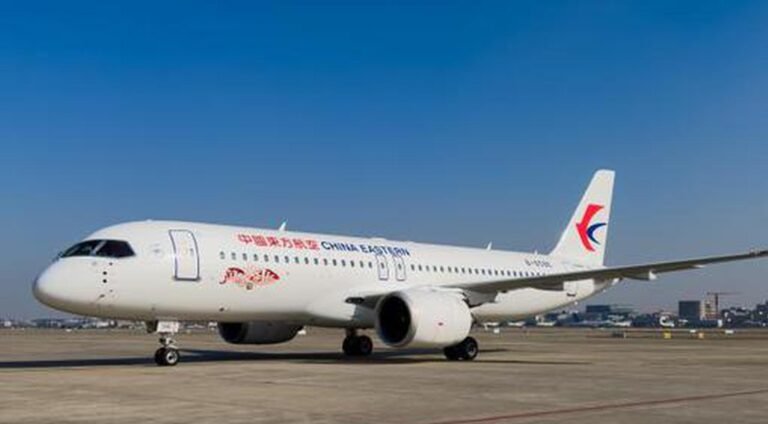
Beijing, China – All eyes are on Beijing Capital International Airport as China prepares to launch the first international commercial service for its C919 aircraft on August 12. This milestone marks a critical step in Beijing’s strategy to bolster its presence in the global commercial aviation market. Furthermore, it challenges the long-standing duopoly of Boeing and Airbus.
Strategic Milestone: Beyond Domestic Borders
Developed by the state-backed Commercial Aircraft Corporation of China (COMAC), the C919 is Beijing’s flagship attempt to capture a share of the single-aisle aircraft market. The daily service between Beijing and Ulaanbaatar, Mongolia, serves as a litmus test for the aircraft’s operational readiness on international routes. Additionally, this helps COMAC refine logistics and service standards for future global expansion.
Challenging the Aviation Duopoly
The international deployment of the C919 is more than just a route expansion; it is a signal of intent. By entering the international arena, COMAC is seeking to build the track record of safety and reliability necessary to compete with the 737 and A320 families. This move is essential for transforming the C919 from a domestic project into a globally recognized commercial option.
The Path to European Certification
The ultimate goal remains achieving airworthiness certification from the European Union Aviation Safety Agency (EASA). Recent trial flights conducted by European regulators underscore the rigorous safety assessment process. Securing EASA certification would be a watershed moment. This could open European and other global markets to the C919 and significantly alter the competitive landscape of international civil aviation.
For China, the C919 represents more than just aviation progress; it is a cornerstone of its high-end manufacturing ambitions. Successfully integrating this aircraft into international skies will be a key indicator of China’s long-term capability to rival Western technological dominance.