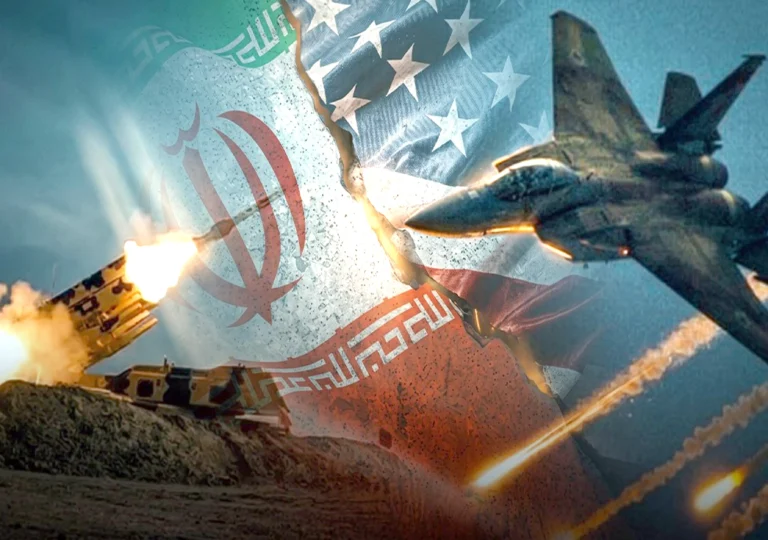
Washington, DC – The confrontation between the United States and Iran has entered a new phase of military escalation, with both sides exchanging missile and drone attacks.
This comes as Tehran expands its operations to include US targets and facilities in several Gulf states,
while simultaneously announcing the continued closure of the Strait of Hormuz.
Exchanges of blows and widening of the confrontation
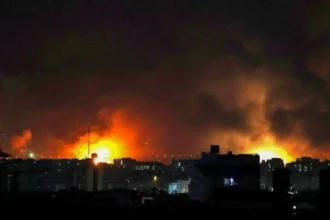
The United States announced the implementation of strikes targeting hundreds of Iranian targets,
which it said came in response to the attacks on a ship in the region.
While Iran responded by launching missiles and drones targeting American military sites in several Gulf countries.
Reports said that the attacks spread to Qatar, which plays a mediating role in calm efforts.
While the UAE announced that its air defenses intercepted Iranian missiles and drones.
This is the first targeting of this kind since early May.
Hormuz at the heart of the crisis
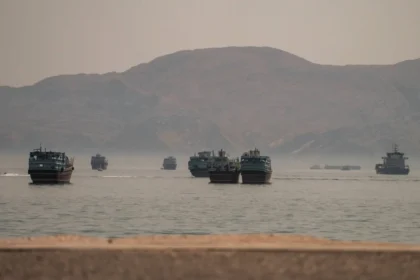
Iran’s Revolutionary Guard has confirmed that the Strait of Hormuz will remain closed until
what it called American interference ends, a move that raises concerns
about the security of international navigation and global energy supplies,
especially given the ongoing military tensions in the region.
In a related development, India announced that one of its citizens is missing
following an attack on a vessel off the coast of Oman.
This reflects the widening repercussions of the escalating tensions
on maritime traffic and commercial shipping in the Gulf and the Arabian Sea.
Fears of the conflict widening
The recent escalation represents a significant shift in the crisis, as confrontations have moved
from targeting sites inside Iran to reciprocal attacks targeting US facilities and bases in the Gulf states.
This has prompted warnings of a wider regional conflict.
Regional and international capitals continue to closely monitor developments,
amid growing calls to de-escalate the situation and resume diplomatic efforts.
Meanwhile, global markets are watching closely to see how the continued tensions will affect energy security,
supply chains, and international trade.