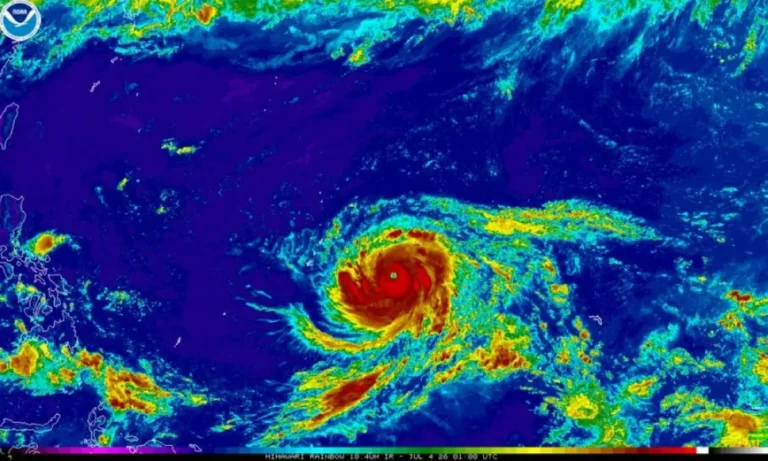
Rota Island, U.S. – Super Hurricane Bavi, a Category 5 storm, slammed into the U.S. territories of the Northern Mariana Islands and Guam in the Pacific Ocean on Monday. The hurricane left a trail of “massive” destruction amid official warnings of an extremely dangerous and life-threatening situation.
“Rota” in the eye of the storm
The National Weather Service confirmed that the small island of Rota was at the eye of the hurricane, with winds reaching speeds of up to 180 miles per hour. Due to the severe weather, communications were partially disrupted. Initial reports from local authorities confirmed significant damage, including downed communication towers and fallen trees.
Officials had previously warned that a direct hit on Rota, a town of about 1,500 residents, could render it uninhabitable for weeks. They also predicted the area would remain without power for extended periods. In Guam and the Mariana Islands, home to a combined population of approximately 210,000, residents prepared for the worst by taking shelter in their homes and bunkers. Hundreds of locals also sought refuge at the Guam Plaza Hotel, which had backup generators. A sense of unease grew as heavy rains leaked into the rooms.
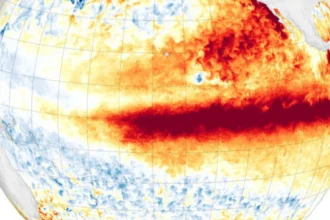
Climate change and the repercussions of “El Niño”
This violent storm comes amid international warnings about rising ocean temperatures. This phenomenon fuels tropical storms and increases their intensity. The meteorological agency indicated that this year, which is experiencing the effects of El Niño, could be the busiest year for storms compared to the past five years. Furthermore, the European Copernicus weather service recently announced that the oceans recorded their warmest June on record, paving the way for more extreme weather events.
A “painful” reality awaits recovery
In Guam, residents described the experience as “painful,” especially given the frequency of such disasters. Many also expressed concern about shortages of supplies, particularly fuel and basic necessities, and the delayed restoration of electricity. As Cyclone Bavi slowly moved westward, conditions gradually improved. However, relief efforts faced significant challenges due to the extensive damage to infrastructure.
The National Weather Service remains on alert. It has confirmed that conditions are still dangerous and that residents are urged to stay indoors until the remaining flood and wind hazards have passed. The region is expected to receive up to 12 inches of rain. This raises concerns about flash floods that could worsen the situation for those affected.