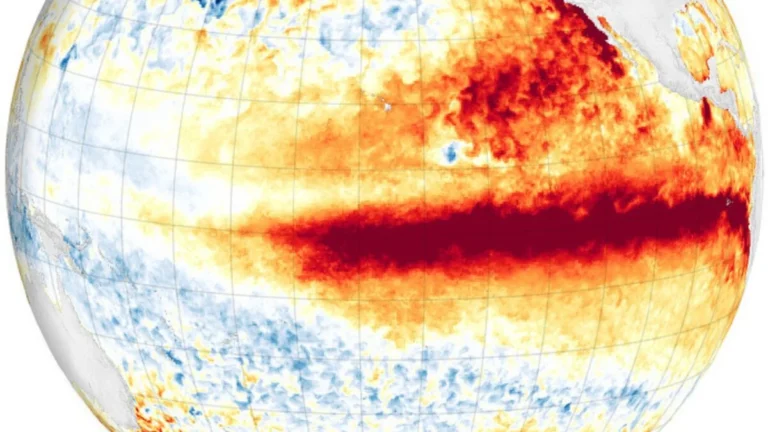
Dubai – Prominent climate experts have warned that the current El Niño phenomenon is on track to set unprecedented records in terms of strength and intensity, placing vast regions of the world in the face of extreme climate risks, ranging from severe droughts to devastating floods. This phenomenon leads to a rise in surface temperatures of the tropical Pacific Ocean, causing global disruptions in wind patterns, atmospheric pressure, and rainfall.
An Event Unseen in 30 Years
Tim Stockdale, an El Niño expert at the European Centre for Medium-Range Weather Forecasts (ECMWF), confirmed that current data indicates an “extreme” phenomenon that the world has not witnessed in over three decades of monitoring. Stockdale explained that current forecasts are characterized by unprecedented strength and consistency across all climate models, noting that it would be a major surprise if this year’s phenomenon did not break all previously recorded records. Although the peak of El Niño usually occurs between November and February, its thermal effects extend for longer periods, reinforcing fears of a continued rise in global temperatures. It is noteworthy that El Niño, combined with human-induced climate change, played a major role in making 2023 the second-hottest year in history, while 2024 was classified as the hottest year ever recorded.
Widespread Geographical Implications
The risks associated with this phenomenon vary by geographic region. The Asian continent, particularly India, faces the potential for a sharp decline in vital monsoon rains, threatening the food security of millions. In Australia, the probabilities of heatwaves and devastating forest fires increase. In Africa, vast parts of the continent are suffering from harsher than usual drought conditions, while the risk of floods and landslides is rising on the coasts of Peru and Ecuador. Conversely, northern Brazil faces an increasing threat of Amazon forest fires due to the drought associated with this climate pattern. This exceptional situation has prompted UN agencies concerned with food aid to issue urgent appeals for funding to implement preventive measures, while many countries have begun preparing national emergency plans to help farmers adapt to imminent climate changes, amid growing international concern that the world is on the brink of the most turbulent climate phase in the modern era.