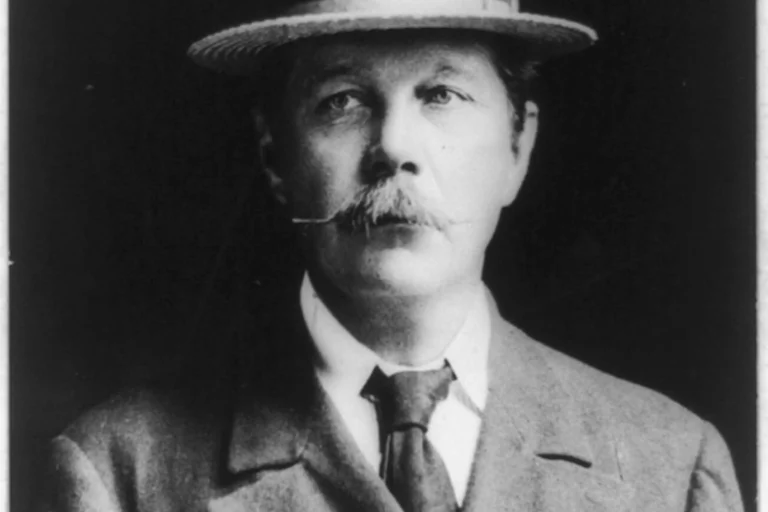
London – The famous detective Sherlock Holmes stands at the pinnacle of the most influential literary figures in the history of detective fiction. He is not merely a fictional hero, but a global symbol of supernatural intelligence and rigorous logic. Since he was created by the British author and physician Sir Arthur Conan Doyle in the late 19th century, his adventures have been translated into dozens of languages and have inspired cinematic, television, and theatrical works that still captivate audiences worldwide to this day.
A Complete Literary Legacy Spanning 60 Adventures
Over four decades, specifically between 1887 and 1927, Arthur Conan Doyle penned 60 literary works that immortalized Sherlock Holmes’ name in world literature. This legacy consists of four long novels and 56 short stories. The journey began with the novel “A Study in Scarlet” in 1887, which marked the first appearance of the genius detective and his constant companion, Dr. John Watson. Works that solidified this status followed, such as “The Sign of Four,” “The Hound of the Baskervilles,” and “The Valley of Fear,” in addition to dozens of short stories that were published in British magazines before being collected into independent volumes that became a reference for crime fiction lovers.
The Art of Deduction and Modern Novel Rules
Doyle did not build his character on coincidence; he made meticulous observation, logical analysis, and scientific deduction a solid foundation for the character. This style brought a paradigm shift in crime literature, where the detective no longer relied solely on intuition, but on material evidence and scientific connection between events. In doing so, Doyle set the rules for the modern detective novel, inspiring countless generations of writers around the world to emulate this approach that combines science and suspense.
The Power of Readers in Restoring the Detective
One of the fascinating stories about this character is that Doyle, at one stage, tried to end Holmes’ life in one of the stories, feeling that the character’s success overshadowed his other works that he preferred. However, the outcry from readers was vast, widespread, and unprecedented, forcing the author to bring the famous detective back to life and continue his adventures. Holmes became a literary phenomenon that transcended its creator’s will. His adventures remain among the most read and adapted works to this day, with hundreds of films, series, and games produced, keeping the British detective sparkling for over a century, confirming that he is one of the greatest and most influential fictional characters in the history of world literature.