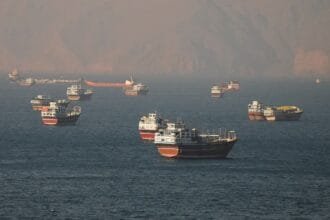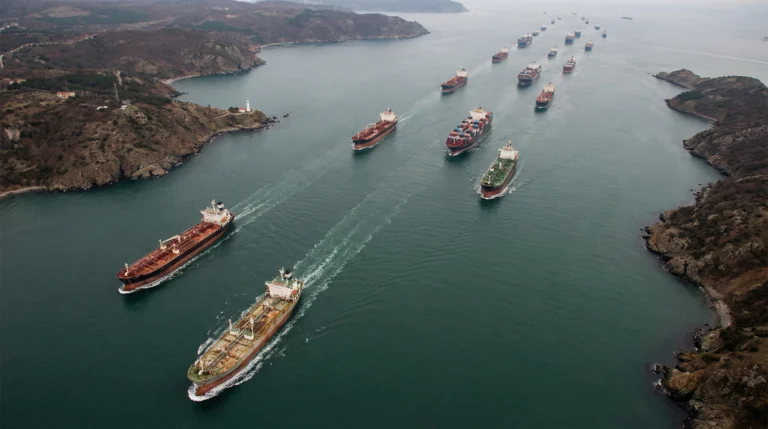
London, United Kingdom – In a clear signal of the resilience of global supply chains, Lloyd’s List Intelligence, a leader in maritime traffic tracking, announced that 258 vessels crossed the Strait of Hormuz during the past week. This figure reflects the continued intensive flow of maritime traffic through one of the world’s most strategic corridors for energy trade, despite the volatile geopolitical conditions the region is witnessing.
Stable Navigation Despite Security Tensions
Maritime data revealed that ship traffic in the strait successfully maintained remarkably stable levels, bypassing the security tensions that have overshadowed the region over the past few weeks. Oil and gas tankers, along with commercial cargo ships, have continued to execute their voyages according to standard operational schedules, supported by additional precautionary measures taken by shipping companies to ensure safe navigation and reassure global markets.
Hormuz.. The Vital Artery of the Global Economy
The importance of the Strait of Hormuz is renewed as an indispensable strategic artery for the international economy, with a significant and critical portion of Gulf oil and gas exports passing through it to global markets. Therefore, the continued smooth flow of passage in this corridor remains under close monitoring by energy markets, economic institutions, and regulatory bodies that fear any disruption that could lead to unforeseen spikes in global energy prices.
Strengthening Global Supply Chain Stability
Maritime shipping institutions confirmed that the continuous flow of vessels through Hormuz plays a pivotal role in strengthening the stability of international supply chains. Regular execution of shipping operations contributes to limiting pressures on oil prices and reduces maritime transport costs—factors that are fundamental to maintaining global trade balance amid successive geopolitical crises.
Adapting to Geopolitical Variables
Economic experts and maritime analysts believe the current pace of transit reflects an exceptional ability of shipping companies to adapt to rapidly changing security variables. This capacity comes thanks to continuous coordination between international parties and maritime transport sector actors to ensure navigation security in the corridor, which remains one of the most sensitive and important strategic transit points on the international trade map.