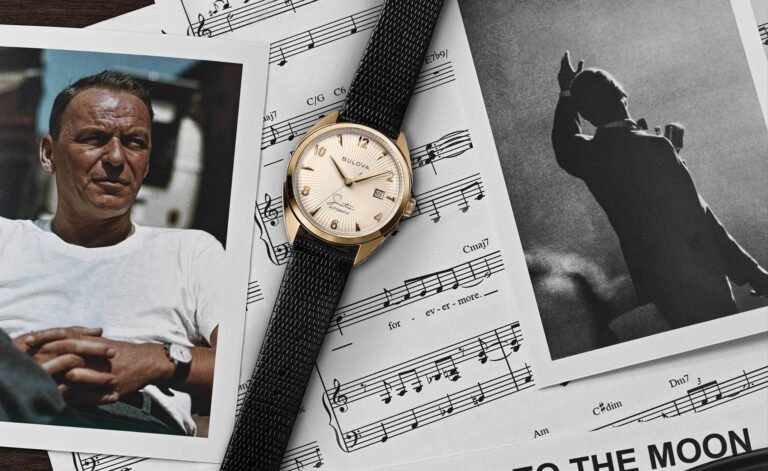
Decades after his passing, “The Voice” that captivated millions—Frank Sinatra—remains both a titan of American music and a lightning rod for controversy. With the launch of the new stage production, “Sinatra the Musical” in London, his youngest daughter, Tina Sinatra, has decided to break her silence, offering a transparent and intricate portrait of her father, far removed from the sanitized versions often imposed on celebrity biographies.
Facing the Truth: No Whitewashing
Tina Sinatra, who currently manages her father’s artistic estate, refuses to turn his career into a flawless fairy tale. She asserts that doing so would be a grave mistake, emphasizing: “His truth was in his music, and we shouldn’t deny it.
The musical focuses on the most difficult chapter of his life: the 1950s, when his career collapsed under the weight of press pressure and industry abandonment, culminating in a personal life torn between his marriage to Nancy and his tumultuous love for Ava Gardner. Tina recalls the bitterness of her childhood, when her brother Frank Jr. told her, “You’re the reason Dad left; you were born and then we broke up.” Today, however, Tina realizes that those very struggles—from alcoholism to emotional turmoil—are what forged the profound depth and resonance in her father’s voice.
“I’m Not Embarrassed by the Truth”
Regarding one of the most sensitive subjects—Sinatra’s alleged ties to organized crime—Tina’s response was shockingly candid: “My father knew a lot of gangsters. I’m not embarrassed to say that, because it’s the truth.”
Tina places these relationships within their historical and social context, noting that his upbringing in poor Italian neighborhoods created a reality where loyalties among “figures” were an inescapable part of the environment. When asked about the legendary story regarding the mob intervening to break his contract with bandleader Tommy Dorsey—thereby launching his solo career—Tina laughs and admits, “I wish it were true.” She notes that even his meeting with The Godfather author Mario Puzo was charged with tension, and that people in restaurants would literally tremble in fear the moment Sinatra walked in.
In the Era of “Cancel Culture”
The interview raised a fundamental question: Could Sinatra survive in today’s world? Tina believes that her father was a constant “target” for the press since the 1940s and that they deliberately provoked him to incite his temper. When asked if he would be “cancelled” in the current climate, she replied confidently: “I think it’s impossible to cancel him.”
At the same time, Tina stood firm as a defender when confronted with allegations of violence against women. She vehemently denied the infamous story about him pushing a woman out a window, labeling it a “distorted” account and insisting that he was the first to take her to the hospital after a purely accidental injury.
Family Conflicts and the Digital Future
Tina did not shy away from criticism, aiming sharp remarks at her father’s fourth wife, Barbara Marx, whom she accused of isolating him from his family in his final years and forcing him to perform exhausting concerts despite his failing health. She also put the Ronan Farrow paternity rumors to rest, dismissing them as a “ridiculous joke” and biologically impossible due to a medical procedure her father underwent before Farrow’s birth.
Looking to the future, Tina is embracing digital technology and AI to bring the “Rat Pack” back to the stage in massive digital productions, affirming that “fearing technology does no good.” She concludes her recollections with a poignant memory of a night in his bedroom, where she asked him if he thought his music would last forever. “The Voice” that shook America paused, then simply said: “I don’t know… I hope so.” Today, that wish seems to have been granted—not just through the melodies echoing everywhere, but through a daughter who continues to defend his “truth,” flaws, genius, and all.