Washington, DC – Over the next four to six weeks, the US military plans to establish advanced training ranges both within and outside the United States. These ranges are designed to simulate realistic combat conditions in Ukraine, with a particular focus on electronic warfare and drone technology.
Integrated combat environment
U.S. Army Secretary Dan Driscoll affirmed on Tuesday that the Army is striving to build a comprehensive electronic warfare environment. This environment will allow for the integration of all aspects of this type of warfare into training exercises. He added, “We want to engage drone manufacturers and developers of counter-drone tools to work alongside our soldiers to enhance their operational skills.”
Driscoll indicated that there are sites within the United States suitable for safely conducting these tests. At the same time, the military is exploring additional options for establishing a global testing ground outside the United States that would allow for “more comprehensive testing,” including trials of hypersonic weapons. However, he declined to specify the exact locations until the planning is complete.
Bridging the defensive gap
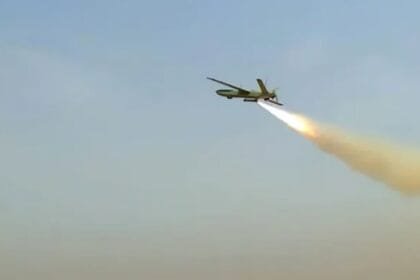
This move addresses weaknesses in current training exercises, which in some aspects lack scenarios for countering drones and electronic jamming. This is due to regulatory restrictions on jamming operations within the United States. Driscoll’s remarks came during an “industry day” organized by the Army to discuss accelerating the development of missile and drone interception systems.
Challenges of the “War of Attrition”
For his part, Dwayne Hayes, an official at the Strategic Threat Office, illustrated the scale of the challenge with staggering figures: Russia produces between 3,000 and 5,000 attack drones and approximately 600,000 smaller drones per month. In contrast, Ukraine produces around 30,000 interceptor drones monthly.
Hayes explained that the American defense industry excels at producing sophisticated and expensive munitions, such as Patriot or THAAD missiles. A single missile can cost up to $5 million. However, he stressed the need to produce low-cost interceptor missiles that are “consumable” in brutal wars of attrition.
Pressure on defense companies
In this context, President Trump met with major defense companies. Another meeting is expected this week to push for faster production. Driscoll explains the American perspective, saying, “Our advanced missiles are the Ferraris of products—they’re amazing—but we need less expensive complementary solutions to meet the rapidly evolving needs of the field.”