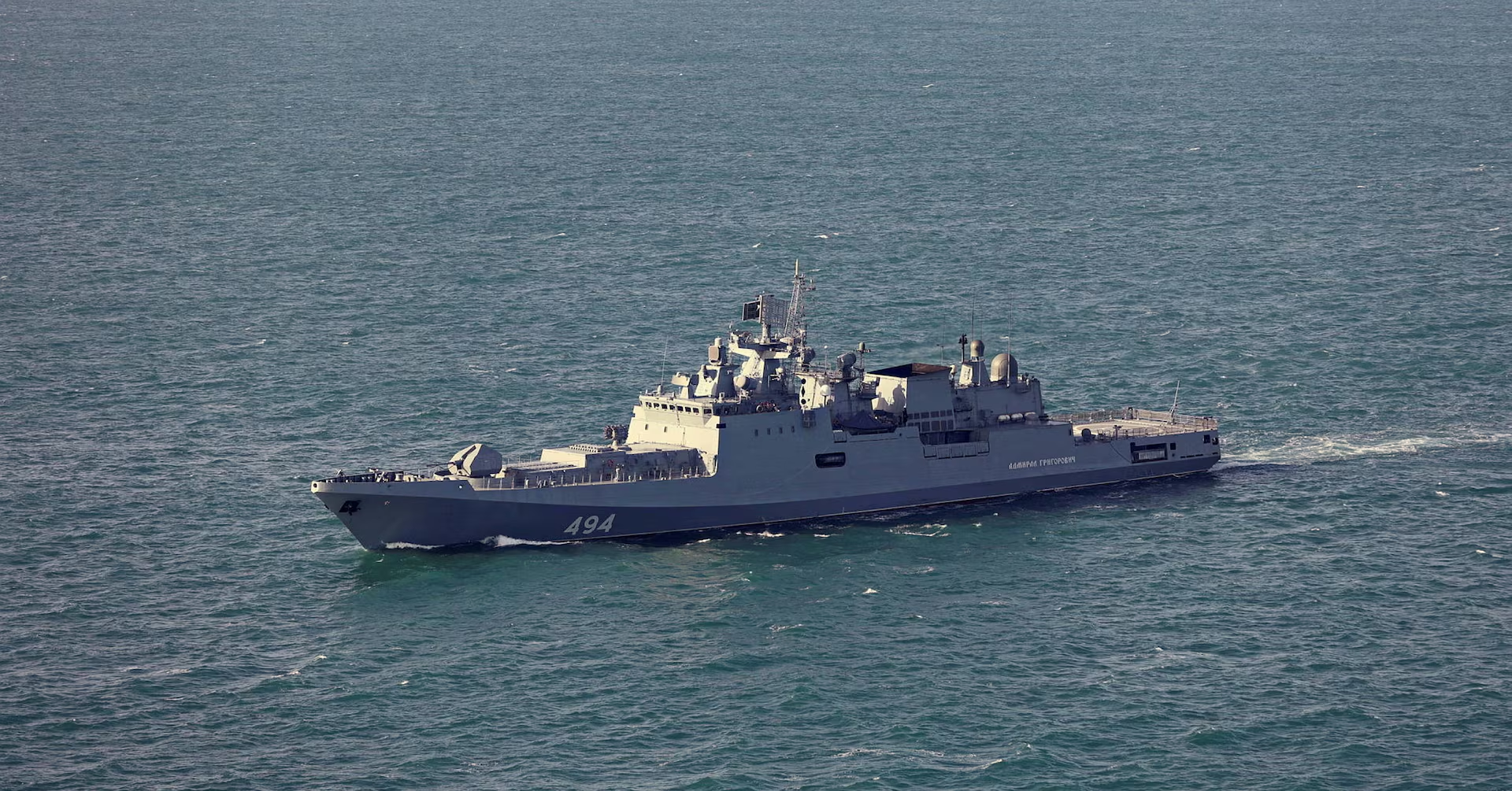
Moscow, Russia – The Russian Ministry of Defense announced that one of its frigates was forced to fire warning shots toward a British yacht. Consequently, this action followed the yacht’s approach in a manner the ministry described as “unsafe and reckless.” Moreover, the statement clarified that the frigate’s crew attempted to communicate with the yacht via designated channels to avoid any friction. Yet, the other side did not respond. As a result, the frigate fired warning shots in a safe direction to compel the yacht to change its course immediately. Thus, the Russian Ministry of Defense asserts that its maneuvers were conducted in accordance with international maritime safety rules. The ministry states this was to ensure the protection of its military units.
Incident Details and Adherence to International Protocols
The Russian Ministry of Defense reported that the British yacht tracked the frigate in a way described as “unprofessional.” Accordingly, the crew had to take field measures to secure the path and maintain navigation safety in the area. In addition, the statement confirmed that the incident ended with the yacht departing the area upon hearing the warnings. There was no human or material damage recorded. Conversely, Moscow emphasized that its naval forces continue to perform their missions in international waters with high professionalism. Consequently, this incident reflects the state of security alertness seen in maritime routes. This alertness arises amidst close proximity between military and civilian vessels.
Moscow Stresses Necessity of Respecting Navigation Rules
The Russian Ministry of Defense consistently stresses the need for all parties to respect the rules governing international maritime navigation. On the other hand, Moscow warned against the risks of approaching military units while they are executing operational missions. This may lead to miscalculation. Consequently, the safety of maritime routes remains a top priority for the Russian Navy. Ultimately, the fact that the incident concluded without further developments reflects both sides’ desire to avoid any unintended escalation at sea. Accordingly, civilian vessels adhering to designated routes and staying clear of military zones remains the best guarantee. This approach can prevent the recurrence of such maritime incidents in the future.