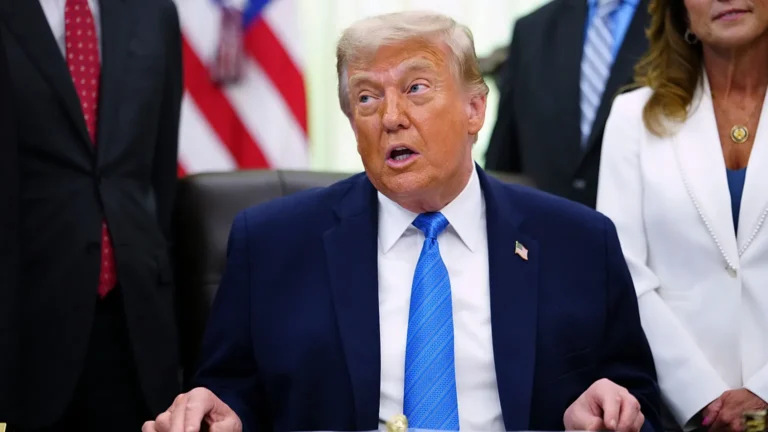
The United States – US President Donald Trump stated that “many great things” will happen in the Middle East following the reach of an initial understanding with Iran. Consequently, this agreement paves the way for reopening the Strait of Hormuz and lifting restrictions on Iranian ports. Moreover, Trump announced during his meeting with French President Emmanuel Macron at the G7 summit that Tehran has fully agreed not to possess a nuclear weapon. As a result, this commitment represents the core of the new understanding between the two sides. Thus, a new phase looms on the horizon that could fundamentally alter the balance of power in the Middle East.
Details of the Understanding and Signing in Switzerland
The US President pointed out that easing sanctions on Tehran will remain tied to its behavior and strict adherence to the agreed-upon terms. Accordingly, the memorandum of understanding is scheduled to be signed in Switzerland this coming Friday. In addition, Trump confirmed that maritime traffic has already begun to return gradually through the Strait of Hormuz, bolstering confidence in the success of this diplomatic path. Conversely, observers believe this development constitutes a major political breakthrough that alleviates the tensions that have dominated the Middle East for a long time. Consequently, global markets are anticipating the impact of this step on the stability of energy supplies.
European Welcome and International Role in Securing Navigation
French President Emmanuel Macron described the agreement as a vital step toward peace and stability in the Middle East. On the other hand, France confirmed its readiness to contribute to international efforts aimed at ensuring the security of navigation in the Strait. Consequently, the details of this American-Iranian understanding have become the most prominent file at the G7 summit. Ultimately, the success of this agreement depends on the parties’ ability to commit to their pledges. Accordingly, eyes remain fixed on the upcoming signing ceremony in Switzerland, amidst broad hopes that this shift in the Middle East will usher in a new era of diplomatic de-escalation.