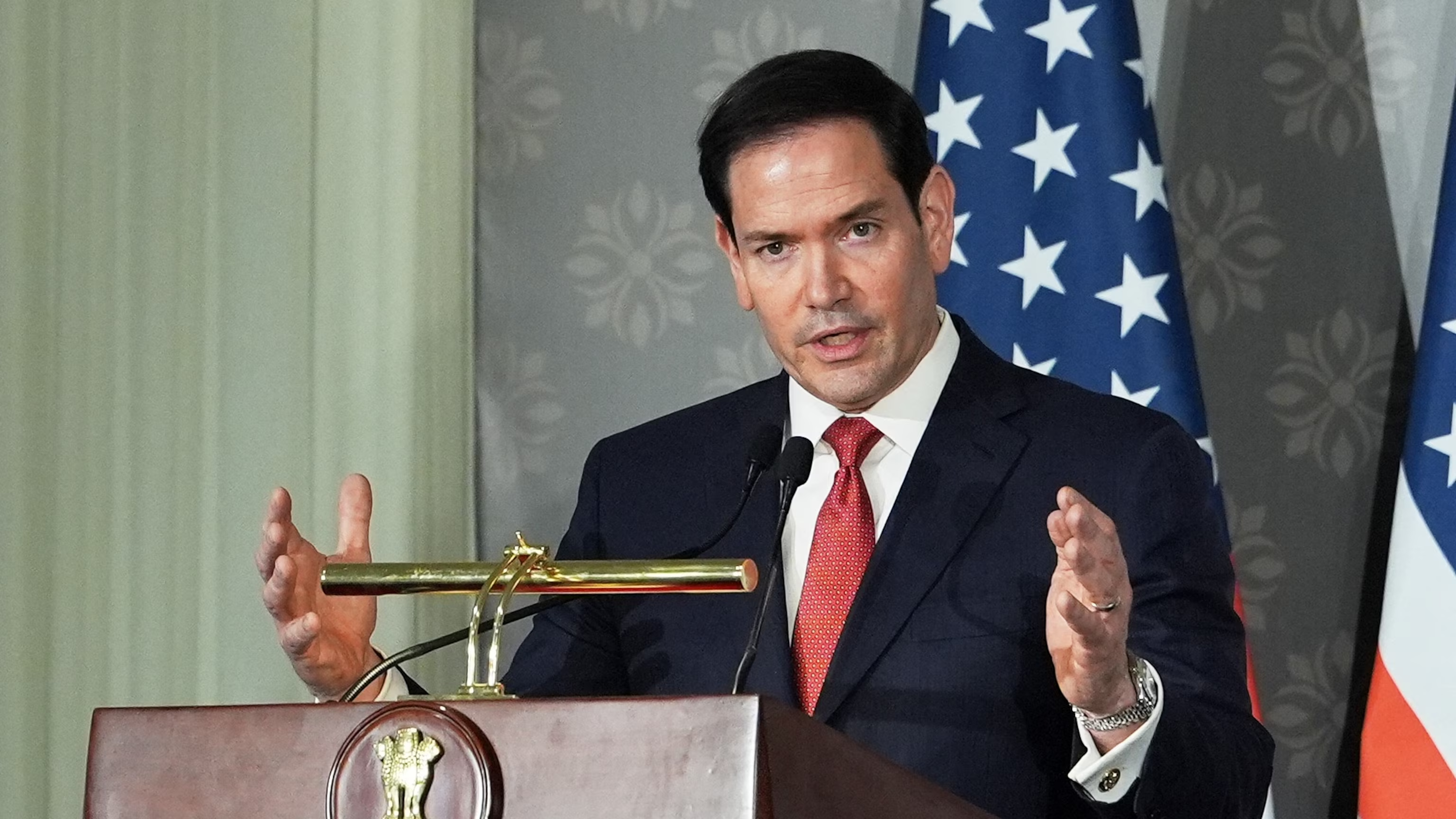
Washington – United States — US Secretary of State Marco Rubio has announced that the United States firmly expects Iraq’s new prime minister to take tangible steps to address pressing American anxieties regarding the activities of Iran-backed militias. Rubio emphasized that this highly volatile security file stands as a pivotal, top-tier priority guiding the structural framework of bilateral relations between Washington and Baghdad.
US Monitoring of Armed Factions and Demands to Bolster State Authority
Rubio clarified, in official declarations, that the US administration is closely and rigorously tracking the operational footprints and field activities executed by armed groups structurally tied to Iran inside Iraqi territory. He noted that systematically tackling and dismantling this complex file constitutes an indispensable strategic milestone required to reinforce domestic security, deliver long-term stabilization, and empower the institutional layout of the official Iraqi state.
The Secretary of State re-emphasized that Washington resolutely backs a stable, fully sovereign Iraq that maintains the absolute capacity to enforce the rule of law, assert state authority, and strictly restrict arms control to formal military and security institutions. Such structural positioning, he maintained, directly enhances national security architectures and safeguards the core domestic interests of the Iraqi people.
Ongoing Defense Deliberations and the Horizon of US Troop Presence
These definitive briefings from Marco Rubio surface at a time when US-Iraqi relations are undergoing continuous, high-level diplomatic and defense dialogues. These active consultations focus on mutual security cooperation parameters, counter-terrorism operations, and the long-term logistical outlook of the US and coalition military footprint across Iraq.
This diplomatic friction unfolds in tandem with mounting regional security and geopolitical headwinds, keeping the focus on US pressure points engineered to curb the influence of rogue armed factions while securing diplomatic missions and military installations against potential tactical threats.