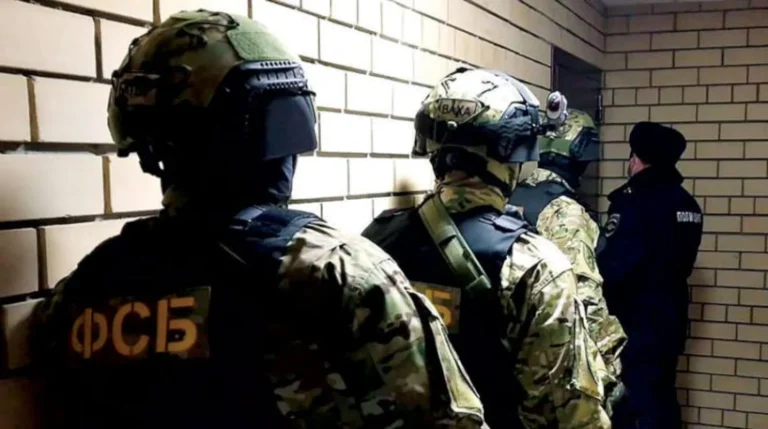
Moscow, Russia – The Russian Federal Security Service (FSB) announced on Tuesday that it had uncovered and documented a large-scale cyber espionage campaign conducted by foreign intelligence agencies. The campaign directly targeted the smartphones of high-ranking Russian officials. The FSB explained that the cyber operation involved hacking the phones and planting malware with the aim of systematically stealing sensitive government information.
A senior Russian security official stated in a video statement released today that security services successfully tracked and documented a large-scale operation carried out by foreign intelligence agencies. The operation aimed to implant and deploy sophisticated malware on the mobile devices of high-ranking Russian officials in order to extract data and eavesdrop on ongoing conversations. In addition, covert audio and video surveillance of the environment surrounding the compromised devices was conducted.
American technology companies colluded in the hacking
The official statement indicated that foreign intelligence operatives exploited the technical capabilities and infrastructure of major global IT companies. This enabled them to carry out covert and unauthorized extraction of various types of security and political data.
Russian security services explained that the extraction of this sensitive information was detected using technological products and services belonging to the well-known American IT companies Fastly and Cloudflare.
The Federal Security Service (FSB) also released a video showing the offices and data centers of the companies whose software was used in the wiretapping operations.
According to the official, this intelligence operation was complex and multi-layered. It also involved close technological and operational coordination between the intelligence agencies of several Western countries.
Campaign objectives and an alternative to “direct recruitment”
The security official revealed that foreign intelligence agencies, in addition to collecting state secrets, sought to obtain accurate data on the prevailing public sentiment in Russian society.
He added that these foreign agencies resorted to this extensive infiltration because they believed that collecting data via smartphones was a much easier and cheaper method compared to attempts to directly recruit informants from within the Russian elite who had access to classified files.
The statement concluded by pointing to another dimension of the operation: individuals and officials whose sensitive and personal information was successfully gathered by foreign intelligence through phone hacking were subsequently and systematically added to Western sanctions lists. This allowed those countries to exert direct political and economic pressure on them.