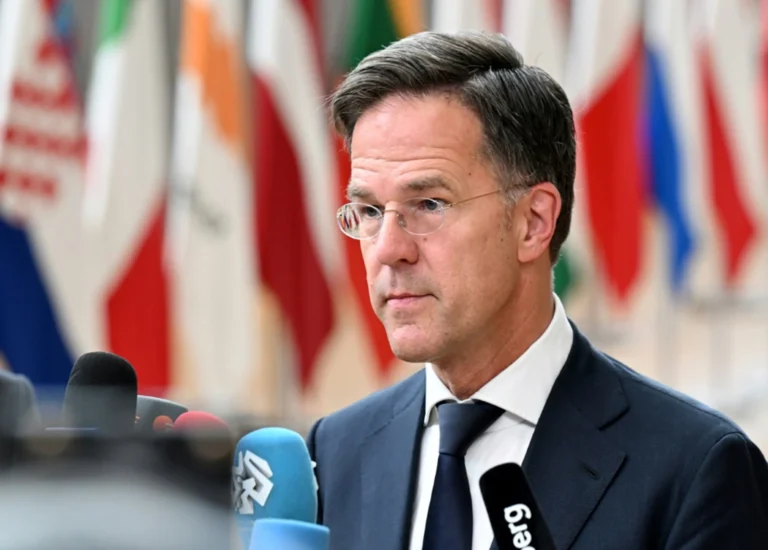
Brussels, Belgium – NATO Secretary General Mark Rutte reassured member states on Wednesday that the United States’ decision to withdraw approximately 5,000 troops from Europe would not harm the alliance’s defense capabilities.
This comes amid growing expectations that Washington’s troop reductions for NATO could have broader implications.
Political disagreements behind the decision
Rutte told reporters, according to AFP, “Regarding this announcement concerning
approximately 4,000 to 5,000 troops, these are rotational forces and do not affect NATO’s defense plans.”
This surprise US announcement followed a sharp disagreement between President Donald Trump
and German Chancellor Friedrich Merz over the conduct of the war in Iran,
which prompted Washington to decide to withdraw these troops from Germany.
This move, and the subsequent confusion about whether the reduction would affect Germany or Poland,
sparked considerable concern in European circles.
However, the Trump administration had previously informed European capitals
that it was seeking to redirect its forces to focus on other geostrategic threats.
Rutte commented on this, saying, “We know that adjustments will be made.
The United States needs to focus its efforts more on Asia, for example,” emphasizing that this would be done “gradually and in an orderly manner.”
Demanding that Europe become self-reliant
In a related development, the US president sharply criticized Europe’s response to the war with Iran, hinting at the possibility of Washington withdrawing from NATO.
The Pentagon translated this pressure into action by announcing a reduction in the number of US brigades deployed in Europe from four to three, thus returning the deployment to 2021 levels.
This coincided with statements by Vice President Jay D. Vance, who confirmed that the deployment of 4,000 troops to Poland had been postponed, not canceled. He also stressed that Europe must rely on its own capabilities.
Reducing the size of the “crisis forces” and holding crucial meetings
Faced with this tense situation, European allies are seeking official clarification from US Secretary of State Marco Rubio during a meeting expected in Sweden this week.
The meeting aims to ease tensions before the NATO summit scheduled for Turkey in July.
While logistical concerns have focused on stationed forces, European diplomats anticipate
that Washington will formally announce, during a meeting of senior officials in Brussels on Friday,
a reduction in its contribution to NATO’s Force Structure, which is designed to respond to international crises within 180 days.
The Secretary General described this as “a normal, expected, and appropriate step.”