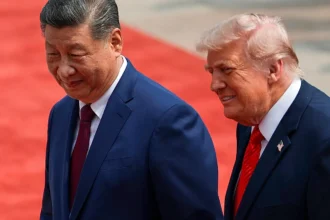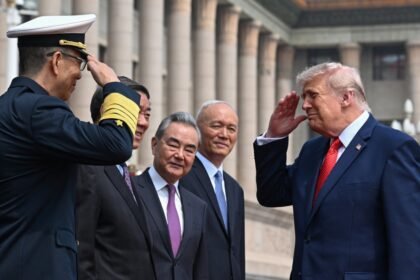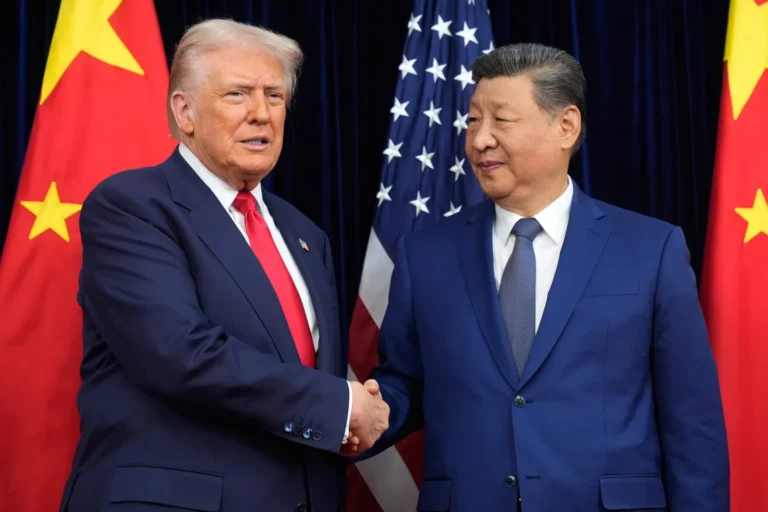
Washington – In a major diplomatic move closely watched by world capitals, the White House announced that President Donald Trump will hold a high-level bilateral summit with Chinese President Xi Jinping in Beijing on the morning of May 14. This visit comes at a highly sensitive time, as complex economic issues intertwine with escalating military tensions in the Middle East and Europe, making this meeting a defining moment in international relations.
Deputy White House Press Secretary Anna Kelly stated that President Trump will arrive in the Chinese capital on the evening of May 13, starting his intensive agenda the following day with a visit to the historic “Temple of Heaven,” followed by an official reception and the first bilateral meeting with President Xi. Kelly clarified that discussions would continue with extended sessions, including a working lunch, aimed at discussing the Trade and Investment Committee and concluding vital agreements in the aviation, agriculture, and energy sectors.
Heated Political Files and Regional Tensions on the Table
On the political and security front, a senior U.S. official revealed that the two leaders will candidly discuss “China’s support for Iran and Russia,” a file Washington considers a direct threat to global stability. Trump is expected to clearly outline his firm vision regarding the ongoing confrontations against the Islamic Republic, as well as addressing the Taiwan issue and security sensitivities in the Indo-Pacific, seeking understandings to prevent a slide into major conflicts.
These intensive meetings aim to clarify positions regarding China’s role in current international disputes. Washington views direct dialogue between the two leaders as the only way to manage strategic competition and clarify U.S. red lines, particularly concerning violations of international sanctions or providing military and logistical support to parties hostile to Western interests in Europe and the Middle East.
Rational Reshaping of Relations and Economic Goals
The deputy spokesperson confirmed that Trump looks forward to inviting President Xi for a reciprocal visit to Washington later this year, emphasizing that current U.S. policy focuses on rebuilding the security and prosperity of Americans. The meeting seeks to achieve these goals by rationally considering current economic and security realities, indicating Washington’s desire to reach realistic understandings that secure its vital interests in a changing global order, moving away from previous policies of procrastination.
In conclusion, this meeting represents a true test of the two countries’ ability to coexist despite deep differences. As global markets await the summit’s outcomes, the focus remains on whether “summit diplomacy” can reduce the pace of the trade war and cool military hotspots, ensuring global economic stability and protecting vital waterways—matters Trump has placed at the top of his agenda for the Beijing visit.