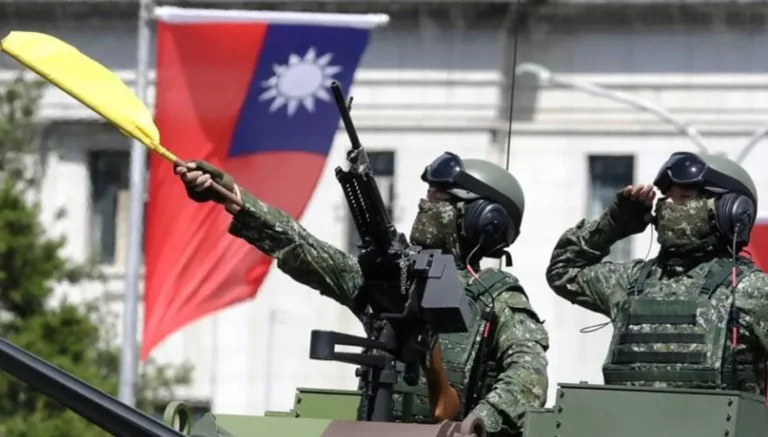
Taipei, Taiwan – Taiwan’s Ministry of National Defense announced on Sunday that it had detected increased Chinese military activity in the island’s maritime zone. Twelve military aircraft, five warships, and one official Chinese vessel were tracked in the past 24 hours, from 6:00 a.m. Saturday to 6:00 a.m. Sunday.
Breaking through the midfield and air defense zone
The ministry stated that nine of the twelve aircraft detected deliberately crossed the median line in the Taiwan Strait, the unofficial border separating the two sides. These aircraft also entered the Air Defense Identification Zones (ADIZs) in the northern and southwestern sectors of the island. In response, the Taiwanese armed forces quickly deployed fighter jets and patrol vessels. Coastal missile systems were also activated to closely monitor and track Chinese troop activity, according to Taiwan News.
The escalation of “gray zone” tactics
These movements are part of a worrying escalation, with Taiwan’s Ministry of National Defense tracking a total of 87 Chinese military aircraft and 73 ships since the beginning of May alone. Since September 2020, Beijing has been pursuing a strategy known as “grey zone tactics.” This strategy involves a gradual and systematic increase in the number of aircraft and ships patrolling the waters surrounding Taiwan. The maneuvers aim to exhaust the island’s defensive capabilities and test its readiness. The Center for Strategic and International Studies (CSIS) defines gray zone tactics as a set of efforts that go beyond the concept of traditional deterrence. They aim to achieve a state’s security and political objectives without directly resorting to overwhelming military force or an outright declaration of war.
Regional and international concern
These ongoing maneuvers raise concerns among regional and international powers about the potential for unintended incidents in the Taiwan Strait that could ignite a wider conflict. Under this military pressure, Taiwan continues to bolster its self-defense capabilities and deepen its security cooperation with its allies to ensure the stability of navigation in one of the world’s most vital waterways. It also reiterates its rejection of any unilateral attempts to forcibly alter the status quo.