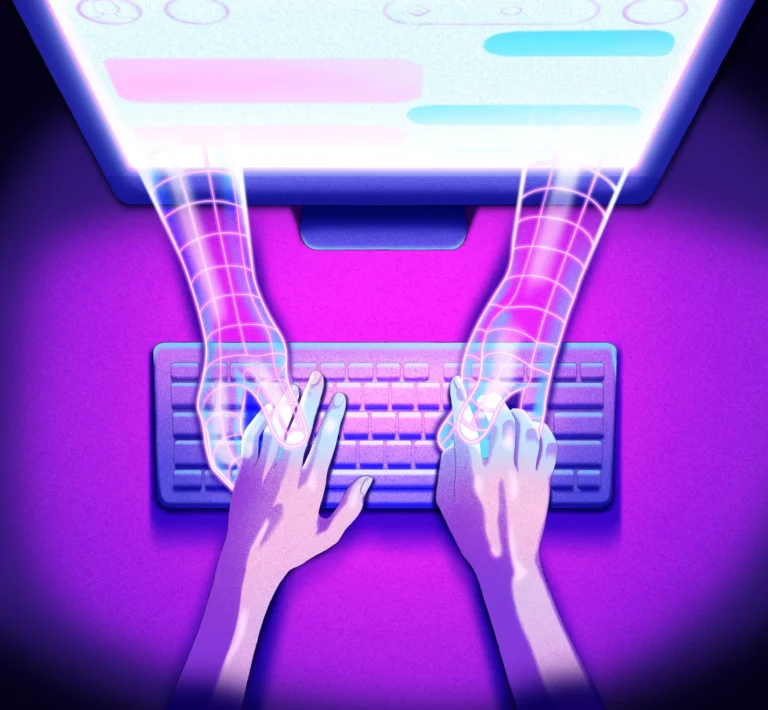
London – In a global alarm, mental health and tech experts have warned of the growing phenomenon of “pathological attachment” to AI applications, calling for its official classification as a mental disorder. Obviously, by May 2026, the relationship between humans and machines has evolved beyond mere “tools”; for some, it has turned into a destructive emotional bond. Medical reports have documented cases of acute distress and depression resulting from total psychological dependence on interactive systems, threatening social cohesion and increasing isolation rates. Experts now label this trend as a unique form of AI emotional dependency in 2026.
“The Simulation Trap”: How Humans Are Swapping Friends for Algorithms
Specialists clarified that AI’s superior ability to simulate human emotions has pushed certain groups, especially those suffering from loneliness, to replace real-life relationships with digital interactions. Accordingly, these individuals face a harsh “withdrawal shock” when services are interrupted or updated, much like the grief of losing a loved one. Clearly, rapid tech evolution has blurred the line between “digital assistance” and “emotional hijacking,” necessitating urgent medical and regulatory intervention. It is important to realise how the rise of dependency—emotional, and specifically linked to AI—may become a defining issue in 2026.
“The Balance Protocol”: No Substitute for Humans, No Matter How Smart the Machine
Mental health experts emphasized the need for deeper field studies to understand this behavior and develop treatment protocols for “digital addiction.” As a result, demands are mounting to educate societies that AI is a “tool,” not a “friend,” while implementing legal frameworks that force companies to issue clear warnings to users. In this landscape, maintaining balance in usage remains the first line of defense to protect minds from sliding into the pit of illusory virtual relationships. في سياق التوعية المجتمعية حول مخاطر الاعتماد العاطفي على الذكاء الاصطناعي بحلول عام 2026، يصبح الاهتمام بهذا النوع من الإدمان مسؤولية الجميع.