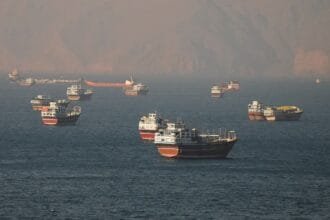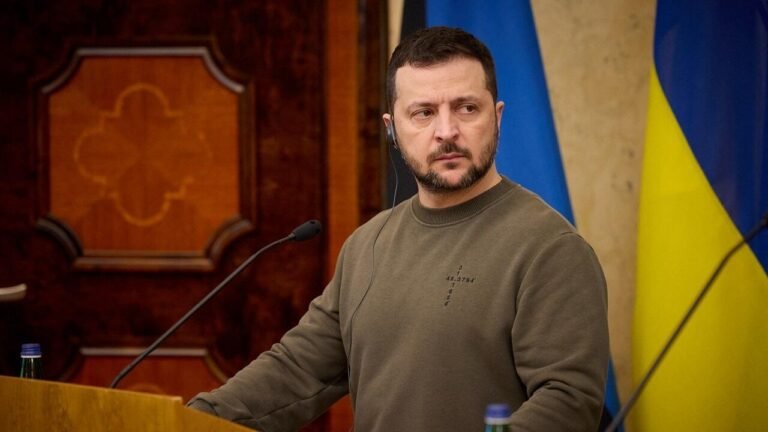
Kyiv, Ukraine – Ukrainian President Volodymyr Zelenskyy announced on Sunday that a military strike had targeted two oil tankers belonging to Russia’s “shadow fleet” at the entrance to the strategic Black Sea port of Novorossiysk.
This operation represents a direct escalation targeting Moscow’s methods of circumventing international sanctions imposed on its oil exports.
Zelenskyy confirmed via X that the two tankers that had been actively transporting Russian crude oil were “completely out of service.” He indicated that Ukrainian forces had begun enforcing “field sanctions” by force of arms against the vessels supporting the Russian war machine.
He added: “These ships can no longer carry out their criminal activities, and we will continue to develop our long-range capabilities in the air, on land, and at sea.”
Intelligence coordination and effective results
The Ukrainian president praised the military leadership, paying special thanks to the Chief of the General Staff, Andriy Hinatov, the intelligence officers of the Security Service of Ukraine, and the naval forces.
He emphasized that Ukraine would not stop there. Rather, it seeks to strengthen its control over waterways to ensure the disruption of vital Russian exports that fund military operations.
The Baltic Front… under fire
Simultaneously with the Black Sea operation, Ukraine’s long arm extended into Russia’s far northwest. The Baltic port of Primorsk was also subjected to a large-scale attack. The governor of the Leningrad region, Alexander Drozdenko, stated that air defenses had intercepted and shot down more than 60 Ukrainian drones overnight.
Despite Russian authorities announcing that a fire at the port had been extinguished without any oil spill or casualties, the drones’ ability to reach such a deep geographical area represents a significant security breach.
These coordinated attacks between the south and the north demonstrate a qualitative shift in Ukrainian strategy. Even distant Russian ports are no longer immune to attack, placing immense pressure on Russian energy supply chains and increasing the costs of insuring and protecting Moscow’s sovereign facilities.