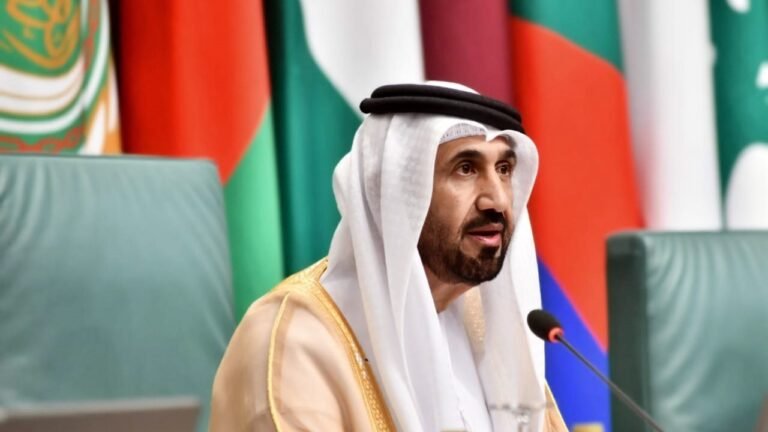
Istanbul, Turkey – The President of the Arab Parliament, Mohammed bin Ahmed Al-Yamahi, has issued an urgent call to the international community and the Parliamentary Network of the Non-Aligned Movement (NAM) to take a clear and firm stance against the law for the execution of Palestinian prisoners. Al-Yamahi emphasized the necessity of explicitly rejecting this legislation and working to mobilize international parliamentary efforts to ensure it is neither passed nor implemented. Accordingly, the Arab stance against prisoner execution represents a strategic diplomatic move aimed at holding global legislative institutions accountable for their legal and moral responsibilities toward ongoing violations in the occupied territories.
A Cry from Istanbul: The Execution Law Defies the Conscience of the Free World
During his speech at the 5th Conference of the NAM Parliamentary Network in Istanbul, Al-Yamahi stated that the network represents the “conscience of the free world’s nations,” noting that issuing a collective resolution rejecting this law is the minimum step toward justice. Obviously, the President of the Arab Parliament seeks to transform this issue into an urgent international file, considering that ignoring such controversial legislation completely contradicts the humanitarian principles upon which parliamentary organizations supporting human rights were founded.
Facing Climate Challenges: Legislation as a Tool for Urban Resilience
n a separate context, Al-Yamahi addressed the conference’s main theme regarding “Urbanization Adaptable to Climate Change,” asserting that environmental sustainability is no longer a luxury but an urgent necessity. Certainly, the link between human justice and environmental sustainability reflects the Arab Parliament’s comprehensive vision in dealing with contemporary crises. Accordingly, the Arab stance against prisoner execution runs parallel with Arab calls to strengthen legislative frameworks that integrate climate considerations into urban planning, ensuring the construction of cities capable of withstanding future changes.