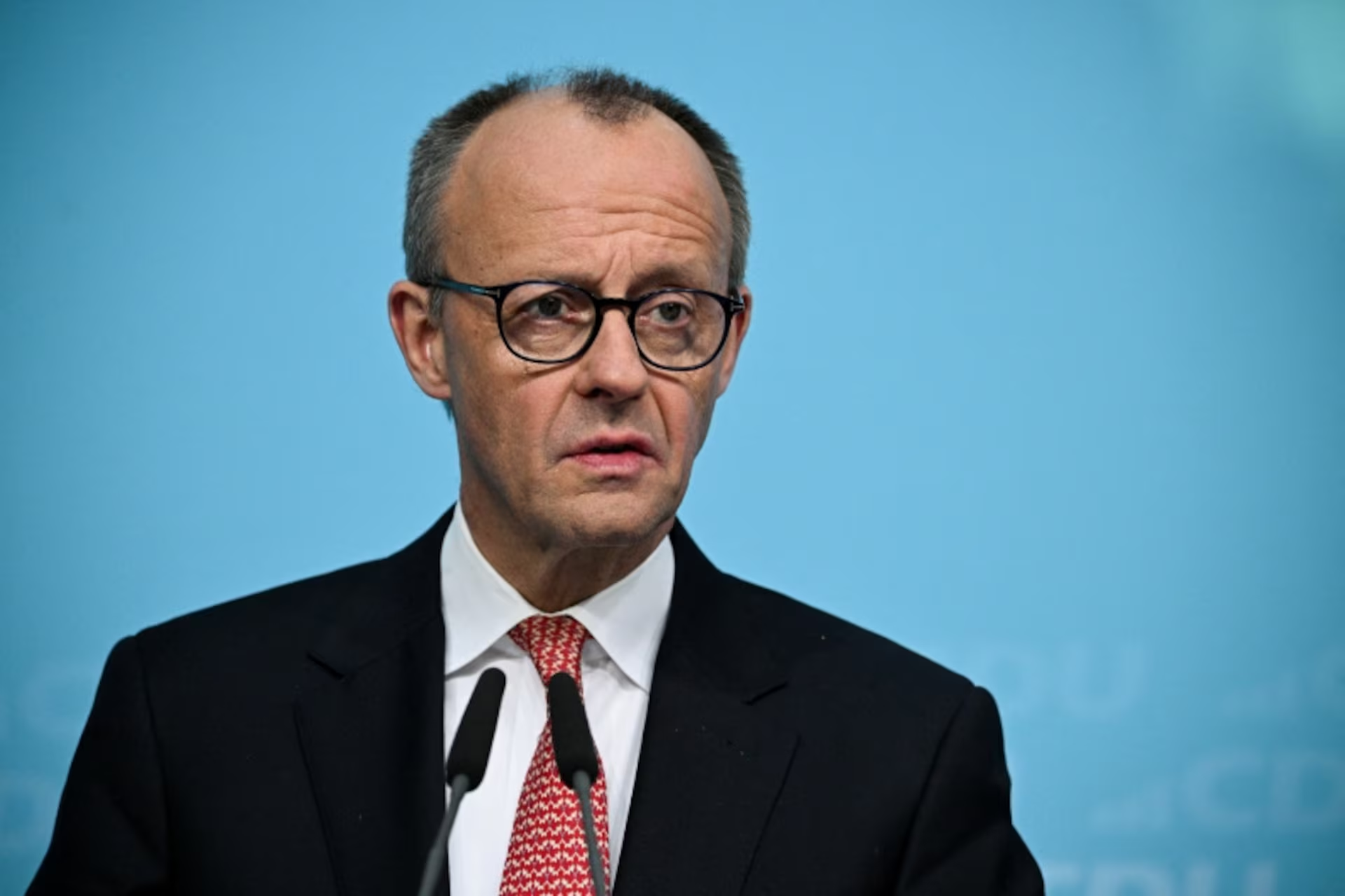
Berlin – Agencies – The German Chancellor confirmed that the option of reducing the number of flights is not on the table as a final solution to handle the challenges currently facing the aviation sector. During his statements, he emphasized the importance of maintaining the stability of air transport and providing full support to “Lufthansa” in the face of economic pressures. Furthermore, the Chancellor believes that protecting this strategic sector represents a national priority to ensure Germany’s connection with global markets. Accordingly, supporting Lufthansa represents a fundamental pillar of Berlin’s policy to maintain the strength of the German economy. In this regard, the government rejects any proposals aimed at forcibly reducing air traffic.
Government Balancing Between Carbon Emission Reduction and Economic Competitiveness
The Chancellor clarified that the German government is striving to balance carbon emission reduction requirements with maintaining the competitiveness of the national aviation sector. Obviously, directly reducing flights could cause significant damage to the economy and international travel and trade chains. As a result, officials warned that environmental solutions should not come at the expense of destroying vital sectors that serve millions of travelers. In addition, supporting Lufthansa contributes to securing thousands of jobs and ensuring the stability of air cargo movement. However, Berlin affirms its commitment to climate goals provided they are implemented through innovative technical paths that do not paralyze transportation.
Increasing European Pressure to Reduce Aviation Emissions and the Future of Short-Haul Flights
This firm German position comes at a time of increasing pressure from the European Union to sharply reduce emissions from the aviation sector. Certainly, there is a wide debate currently ongoing about the future of short-haul flights within the continent and the possibility of replacing them with high-speed trains. Accordingly, Germany resists these trends that might limit the national carrier “Lufthansa’s” flexibility in regional markets. On the other hand, supporting Lufthansa is linked to Germany’s ability to lead the European aviation sector and direct it toward balanced solutions. In the same context, experts believe that train infrastructure is still insufficient to compensate for the shortage that cancelling flights might cause.
Developing Sustainable Aviation Fuel as a Strategic Alternative to Reducing Capacity
The German government confirmed that it clearly prefers technology-based gradual solutions, such as developing Sustainable Aviation Fuel (SAF). Obviously, improving operational efficiency and modernizing aircraft fleets represent the best path instead of reducing the operational capacity of major companies. As a result, Berlin is allocating huge investments to support clean energy research in the aviation sector to ensure a green future without restrictions. In addition, supporting Lufthansa enhances the chances of success for these technical transformations due to its long experience and implementation capacity. Ultimately, Berlin’s decision to stick to full air traffic remains a defense of economic sovereignty and the global connectivity of the German state.