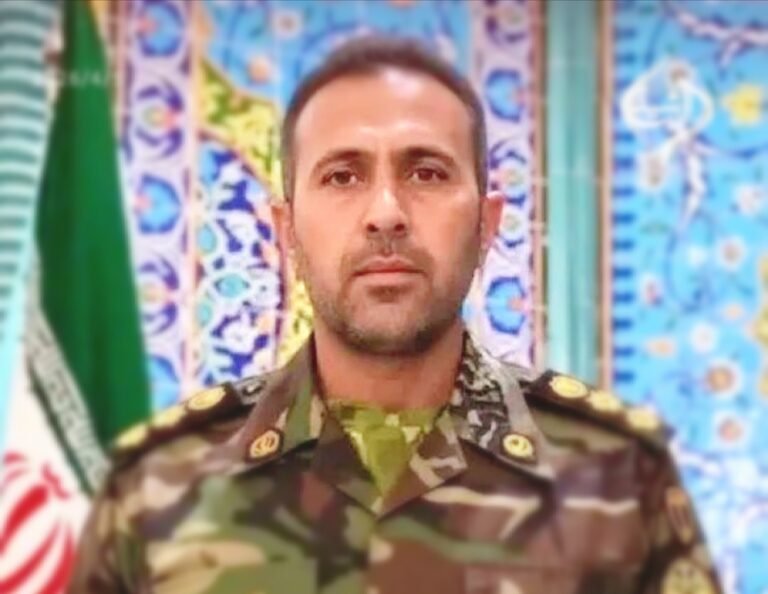
Tehran – In the most violent escalation of its kind, the Mehr News Agency confirmed the death of Brigadier General Masoud Zare, commander of the Iranian Army’s Air Defense College. This came after a joint airstrike carried out by US and Israeli forces.
Details of the targeting in “Shahin Shahr”
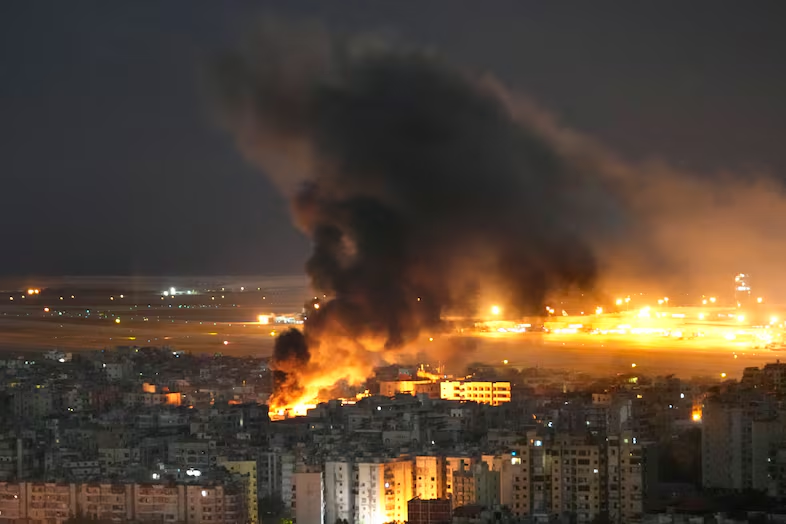
According to reports released on Sunday, April 5, 2026, the intense bombardment targeted vital facilities
and an air defense academy in the Shahin Shahr region of Isfahan province.
Sources also indicated that Brigadier General Zare, who oversaw the management
and training of elite personnel responsible for protecting Iranian airspace, was killed in the attacks.
The strikes were specifically aimed at destroying the region’s military and logistical infrastructure.
Official and popular mourning
Reports indicate that Brigadier General Zare’s body will be transported tonight to Shahin Shahr for an official and public memorial service. This comes amid heightened security measures.
It is worth noting that Brigadier General Zare is considered a prominent military figure.
He was appointed commander of the academy with the rank of colonel in 2023.
He was later promoted in recognition of his pivotal role in developing innovative defense systems.
Context of military escalation and its dimensions
The assassination of Brigadier General Masoud Zare comes as part of a series of intensified airstrikes launched
by Washington and Tel Aviv against Iranian targets.
This was in response to escalating tensions in waterways and at oil facilities.
Military analysts believe that targeting the commander of the Air Defense Academy represents
a “moral and technical blow” to the regime’s army,
as it directly affects the center for training personnel responsible for countering aerial incursions.
Reactions and the “Bone-Breaking” Conflict
While official media in Tehran raised the stakes by describing Zare as a “martyr” who died in a treacherous attack,
opposition media outlets covered the news as a result of the failure of defense systems to protect their leaders.
This incident marks a new chapter in the ongoing conflict. All eyes are now on the nature of Iran’s anticipated response,
especially given that the attack targeted the heart of Isfahan, home to some of the most sensitive strategic facilities.
In this volatile climate, international fears are growing that the region will slide into a full-blown war.
The assassinations targeting high-ranking officials have become a new fuel for the direct confrontation
between the Washington-Tel Aviv axis on one side, and Tehran and its allies on the other.