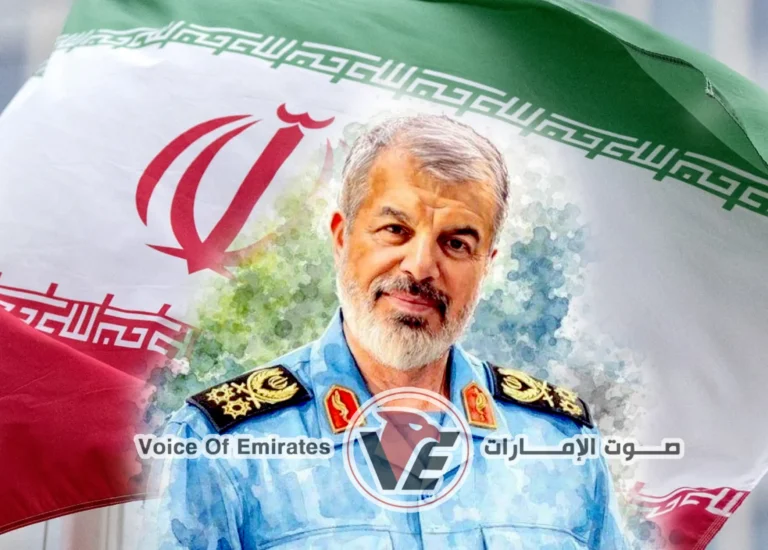
Tehran, Iran – Iran’s Revolutionary Guard announced on Tuesday the death of Brigadier General Jamshid Ishaqi, an advisor to the Chief of Staff of the Armed Forces, in a joint airstrike.
According to an official statement, the attack, which targeted his home, killed him and several members of his family.
A busy military parade
The statement from the Islamic Revolutionary Guard Corps (IRGC) praised the career of the deceased,
describing him as a “commander-in-chief” who dedicated his life to serving
the Iranian regime since the victory of the revolution in 1979.
The statement also noted that Ishaqi was a pivotal figure in strengthening the capabilities of the Iranian armed forces.
He also contributed effectively to the development of national defense systems.
The statement recalled his prominent role in the “Sacred Defense” (the Iran-Iraq War).
Furthermore, the statement highlighted his advisory roles in recent military operations in the country.
The aftermath of the assassination
The commander-in-chief of the Islamic Revolutionary Guard Corps (IRGC) offered
his condolences to the Supreme Leader, the family of Major General Jamshid Ishaqi,
and the armed forces, emphasizing that “his jihadist legacy will remain etched in the memory of the military establishment.”
The statement stressed that these losses will not deter the institution from continuing its “path of resistance and defense.”
This assassination comes at a time when Iran is witnessing a continuous series of targeted killings of
senior military commanders and officials since the start of military operations on February 28.
A blow to the Iranian leadership structure
Observers believe that the assassination of General Ishaqi represents another blow to the Iranian leadership structure.
The Iranian leadership is already under increasing pressure as a result of precise and intensive airstrikes.
Meanwhile, Iranian authorities continue to vow to retaliate against what they describe as “external aggression.”
Regional and local observers are also closely watching the repercussions of
these escalating assassinations on the security landscape of the region.
This is especially true as the conflict enters a more complex phase, further complicated
by the exchange of attacks and the Israeli-American threat to impose a new military reality.