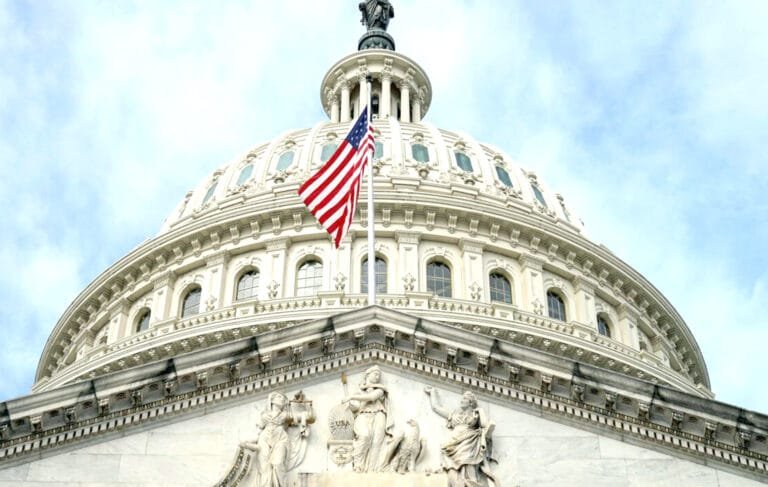
Washington, DC – In a political move reflecting the deep divisions within the US legislative branch, the Senate today rejected a resolution aimed at restricting President Donald Trump’s war powers.
The resolution sought to prevent him from launching large-scale military operations against Iran without prior and explicit congressional approval.
The vote was extremely close, with 53 senators opposing the resolution and 47 supporting it.
This reflected the relative Republican control and their ability to protect the White House’s executive powers under the current military circumstances.
The session witnessed surprises in party loyalty.
For example, Republican Senator Rand Paul broke ranks with his party and voted in favor of the restriction.
Meanwhile, Democratic Senator John Fetterman broke ranks and voted against the resolution.
Historical context and field escalation
The rejected bill is based on the 1973 War Powers Resolution, passed during the Vietnam War to ensure congressional oversight of foreign military interventions.
The law requires the president to notify Congress in advance of any military action.
It also requires the president to obtain formal authorization for continued hostilities.
This political maneuvering comes amid escalating regional tensions,
with the United States and Israel conducting intensive military operations against Iranian targets since February 28.
These confrontations have resulted in the deaths of hundreds,
including Supreme Leader Ali Khamenei and high-ranking security officials.
As a response, Tehran retaliated by launching waves of missiles and drones toward Israel.
Regional repercussions
The effects of this escalation were not limited to direct confrontation,
but extended to Iranian attacks targeting what it described as “American interests” in several Arab countries.
These attacks resulted in casualties, including deaths and injuries.
In addition, they caused significant damage to civilian infrastructure.
This prompted widespread Arab and international condemnation.
These actions were considered a direct threat to the security and stability of the region.
By rejecting this resolution, President Trump retains considerable room
for maneuver in managing a direct military conflict with Tehran.
All of this is happening while the international community anticipates
the possibility of a slide into a full-blown confrontation with unpredictable consequences.