Dubai / Tehran — Voice of Emirates has learned from sources familiar with the matter that Iran’s new Supreme Leader is expected to be selected within the next day or two. As attention turns to the Assembly of Experts, the constitutional body tasked with deciding the succession, there are growing signs that establishment-backed figures are gaining ground. Meanwhile, the prospects of reformist and moderate personalities are fading.
- The Assembly of Experts at the Center of the Scene
- Arafi Leads the Institutional Calculations
- Hosseini Bushehri Among the Strongest Contenders
- The Second Tier
- Mojtaba Khamenei Present in Political Circulation
- Reformists’ Chances Recede
- Seyyed Hassan Khomeini: A Consensus Option, Not a Leading Candidate
- A Managed Transition Appears Most Likely
The Assembly of Experts at the Center of the Scene
According to information circulating within Iranian circles, the process of selecting the new Supreme Leader is moving within the institutional framework of the Assembly of Experts. This body is constitutionally tasked with appointing the leader. Iranian institutions do not usually announce the names of candidates directly. Even so, the composition of the assembly’s leadership and committees is revealing. In particular, the committee concerned with the qualifications for leadership offers important clues. These are important for understanding the direction of decision-making within the system.
Arafi Leads the Institutional Calculations
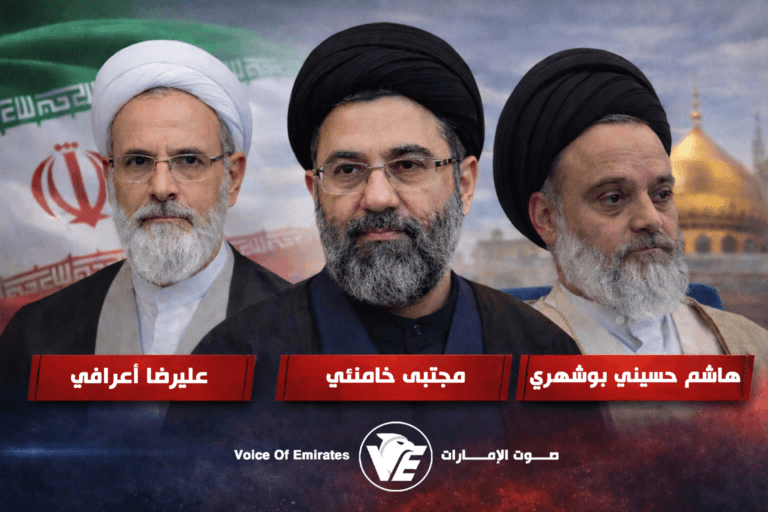
The reading closest to the structure of the Assembly of Experts indicates that Alireza Arafi is at the forefront of the names being considered from within the establishment. This is due to his position in the assembly’s leadership and his presence within the circle linked to the leadership file. That institutional standing strengthens his prospects as a candidate likely to enjoy acceptance within the regime’s traditional structure. This is especially true at a stage that requires an orderly transition. The goal is to avoid any political or religious turbulence.
Hosseini Bushehri Among the Strongest Contenders
The name of Seyyed Hashem Hosseini Bushehri also stands out as one of the most prominent figures within the institutional landscape of the Assembly of Experts. This status places him among the most strongly favored names. Observers view him as a quiet establishment candidate who combines religious stature with organizational weight. As a result, he is acceptable to the system’s main centers of influence.
The Second Tier
In the next rank, names such as Mohammad Reza Modarresi Yazdi, Mohsen Mohammadi Araki, Abbas Kaabi, and Ghorbanali Dori Najafabadi are also circulating. These figures possess varying degrees of religious and institutional weight. However, they remain closer to the second tier compared with the names more firmly entrenched in the leadership of the Assembly of Experts and its influential committees.
Mojtaba Khamenei Present in Political Circulation
In contrast to the names with clear institutional visibility, Mojtaba Khamenei remains strongly present in political and media discussions as a heavyweight in the succession equation. Yet, according to a reading based on the public structure of the institutions, his presence still appears less direct than that of the men of the Assembly of Experts themselves. This makes his position more closely tied to undeclared power balances rather than to published organizational indicators.
Reformists’ Chances Recede
As for reformist or centrist figures, their prospects appear limited at the current stage. Former president Mohammad Khatami does not appear to be a name under consideration within the institutional succession track. Instead, he is a political figure with symbolic and reformist standing outside the circles of direct religious decision-making. Hassan Rouhani, meanwhile, despite his clerical background and experience within the institutions of the system, does not appear from his current position to be among the leading names in the race.
Seyyed Hassan Khomeini: A Consensus Option, Not a Leading Candidate
Sayyid Hassan Khomeini stands out as the name closest to that of a consensus candidate rather than an outright reformist. He possesses a symbolic and religious authority that cannot be ignored. However, he does not yet appear to be at the forefront of the actual power dynamics influencing the succession process.
A Managed Transition Appears Most Likely
Taken together, the available indicators suggest that the Iranian system is moving toward a swift but carefully managed transition. The goal is to ensure continuity and avoid any vacuum at the top of power. According to information obtained by Voice of the Emirates from informed sources, the coming hours or the next two days may bring an official resolution to the issue. The balance of probability still favors the figures most firmly rooted within the Assembly of Experts and the traditional religious establishment.