
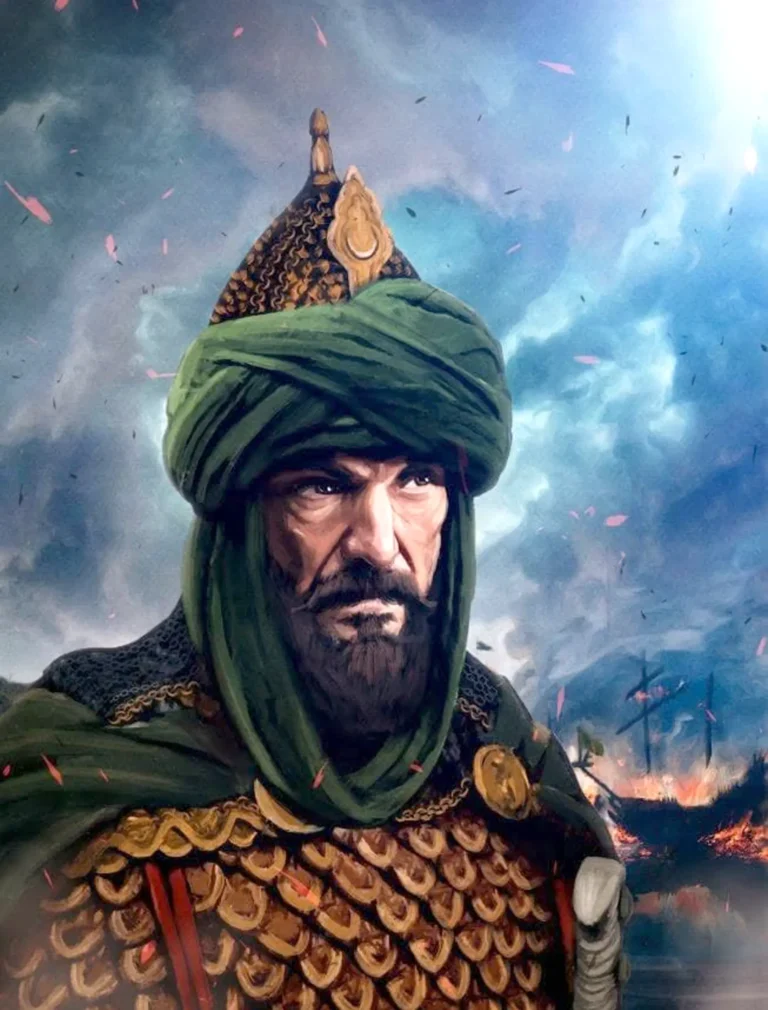
Cairo, Egypt – The anniversary of Sultan al-Malik al-Salih Najm al-Din Ayoub ascension to the throne of the Ayyubid dynasty is being commemorated.
He was one of the most prominent rulers of the Ayyubid era, and his name is linked to a pivotal period in the region’s history.
This is not only due to his confrontations with the Crusaders, but also because he paved the way for the rise of the Mamluks,
who later established one of the most powerful Islamic states of the Middle Ages.
Al-Salih Ayyub assumed power in 1240 CE. This was a time when the Ayyubid state was suffering from internal conflicts and power struggles among the princes of the Ayyubid dynasty.
Therefore, he worked to consolidate his authority in Egypt and the Levant. He then sought to rebuild the army and strengthen its capabilities to confront external threats.
Increasing reliance on the Mamluks
The sultan increasingly relied on the Mamluks, soldiers trained in military arts from a young age, mostly of Turkish and Caucasian origin.
In addition, he surrounded himself with a loyal military force, later known as the Bahri Mamluks.
He housed them on Rawda Island in the Nile River and made them the backbone of his army.
This army proved its effectiveness in battle, particularly during the Seventh Crusade led by the French King Louis IX, which targeted Egypt.
Although al-Salih Ayoub died during the crusade in 1249, his forces continued fighting under the command of his wife, Shajar al-Durr, and the Mamluk commanders.
They were able to defeat the Crusaders and capture Louis IX at the Battle of Mansoura.
The death of Salih Ayyub was a historical turning point
The death of As-Salih Ayyub marked a historical turning point, as the influence of the Mamluk leaders rose to unprecedented heights.
With the end of the Ayyubid dynasty in Egypt, the Mamluks officially assumed power in 1250. They thus established a powerful state that lasted for nearly three centuries.
Later, they successfully repelled the Mongols at the Battle of Ain Jalut, maintaining Egypt’s position as one of the most important powers in the Islamic world.
Historians argue that As-Salih Ayyub’s reliance on the Mamluks was not merely a military maneuver, but a decision that shifted the balance of power in the region. It directly contributed to the transfer of power from the Ayyubid dynasty to the Mamluk Sultanate.
The Mamluk Sultanate played a crucial role in protecting the Islamic East during one of the most turbulent periods in history.