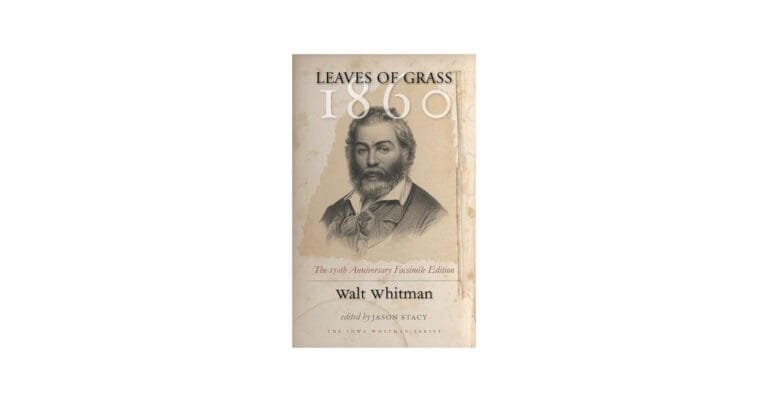
New York, United States – On this day, literature enthusiasts around the world commemorate the anniversary of the publication of the first edition of the poetry collection “Leaves of Grass” by American poet Walt Whitman. This collection is considered one of the most influential literary works in the history of modern poetry, as its appearance marked a radical turning point in the course of American literature, later becoming a fundamental reference for many poets and writers across the globe.
Breaking Traditional Poetry Rules
The collection was first published in 1855, self-funded by Whitman, who personally oversaw all details of its printing and design. Although its first edition contained only 12 poems, it sparked widespread controversy in literary circles due to its different and innovative style that broke the strict traditional rules of poetry. Whitman relied in his poems on “free verse” and a simple language close to the details of everyday life, along with a deep celebration of humanity, nature, and the values of freedom and democracy.
Between Harsh Criticism and Emerson’s Praise
“Leaves of Grass” did not enjoy widespread acceptance in its early days; rather, it faced harsh criticism for its intellectual and linguistic boldness, which was unfamiliar at the time. However, the praise of the prominent American writer and philosopher Ralph Waldo Emerson served as a pivotal beacon of light, as he considered the work “a new beginning for American literature.” This praise gave Whitman a significant morale boost that encouraged him to continue developing his collection and enriching his poems.
A Lifelong Project and Continuous Intellectual Development
Throughout his life, Whitman never stopped revising, editing, and adding new poems to the book. This passion continued until its final edition, published before his death, which included more than 400 poems. “Leaves of Grass” thus transformed into a comprehensive literary project that accompanied the poet throughout his life, truly reflecting the evolution of his intellectual, human, and philosophical vision.
A Literary Legacy Transcending Time and Space
Today, Whitman is considered one of the world’s most prominent pioneers of free verse. His works have left a profound impact on successive generations of poets, not only in the United States but across various cultures; his poems have been translated into dozens of languages and have become a major subject of study in global universities and literary institutions.
“Leaves of Grass” continues to maintain its prestigious status as one of the most important classic works in world literature. This is due to the deep human and philosophical ideas it carries, celebrating the individual, freedom, and diversity, affirming literature’s immortal ability to transcend the boundaries of time and space, remaining an inexhaustible source of inspiration for readers and creators everywhere more than a century and a half after its publication.