
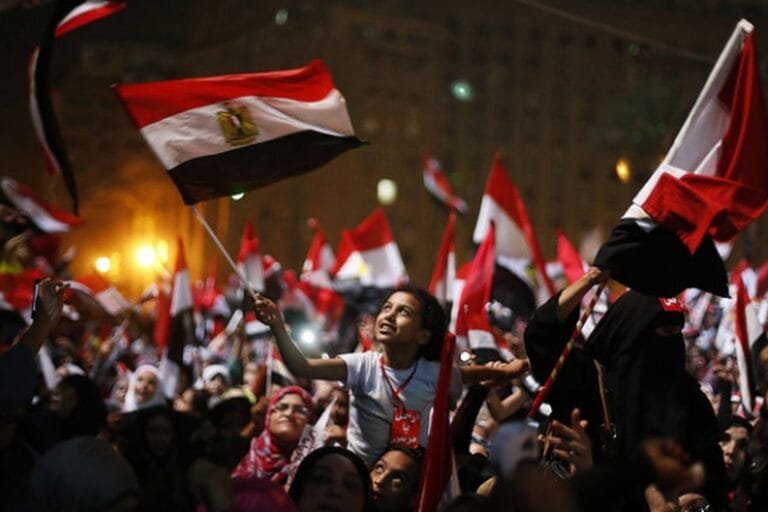
The events of the June 30th, 2013 revolution did not stop at the boundaries of history books and political analysis. Instead, they extended their profound influence to the literary creative arena. A group of Egyptian writers sought to document this turbulent era in the country’s history. The Egyptian novel succeeded in being a mirror reflecting the intellectual and social conflicts that Egypt witnessed since the Muslim Brotherhood’s rise to power. Eventually, the outbreak of the popular protests ended that phase. Moreover, these works did not settle for recounting dry facts but dove into the depths of the daily life of the Egyptian citizen. They observed the features of polarization and division that shadowed the street. Eventually, they became literary documents that preserve the memory of those historical moments.
Literary Readings of the Turmoil Period
Among those works stands out the novel “Terrorist 20” by author Dr. Alaa Al-Aswany, which presented a narrative dissection of the charged atmosphere that preceded the June 30th revolution. Al-Aswany managed, through a tight narrative structure, to address the intellectual and political transformations that swept through society. He depicted the raging conflict between the state and religious currents through characters whose paths intersected with the reality of that stage. Thus, the novel gained an analytical dimension that transcends traditional storytelling.
In the same context, the novel “Paradise of the Brotherhood” by author Ahmed Ashmawy stands as one of the most prominent literary testimonies to the Brotherhood’s rule. Ashmawy succeeded in observing the features of the political and social scene in a narrative style that delves into the impact of the group’s decisions on the structure of state institutions. At the same time, he depicted the state of growing popular anger that paved the way for the exit of millions on June 30th. As a result, it became a literary document reflecting the feelings of the Egyptian street at that critical moment.
Foreseeing Reality Through Fiction
Works did not stop at direct documentation but extended to include visionary insight, as in the novel “The Exit Door” by author Ezzedine C. Fishere. This novel presented a literary vision that touches upon political changes in Egypt in a way that many later considered a deep reading of the reality the country witnessed. The novel carried within its pages symbolic and realistic projections on the eternal conflict between authority and society. Consequently, it became a literary work that anticipated events and provided a human and philosophical vision of the variables that were surging through the Egyptian arena.
Literature as Part of Cultural Memory
Literary critics confirm that the Egyptian novel proved a strong presence in documenting major transformations. These works did not just recount historical events but sought to dismantle the human emotions and social changes that accompanied that stage. These novels are today considered an integral part of Egyptian cultural memory. In fact, they succeeded in transferring the details of those turbulent years to new generations. They also presented a human vision that exceeds the limits of direct political documentation. This leaves literature the task of immortalizing the feelings and hopes that Egyptians lived through during one of the most important milestones in their modern history.