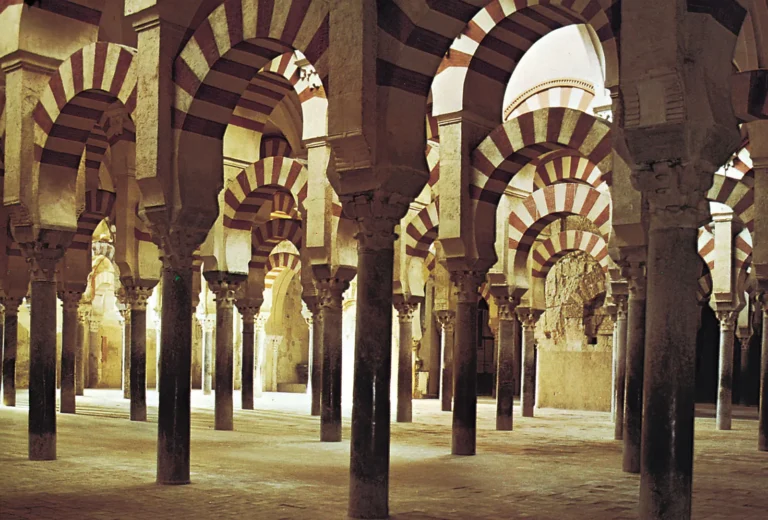
Cordoba, Spain – The anniversary of the fall of Cordoba represents one of the most influential milestones in Andalusian history, as Muslims lost one of their greatest civilizational capitals after centuries of scientific, cultural, and political prosperity. This historical event constitutes a major turning point in the trajectory of the Islamic presence in the Iberian Peninsula and serves as a profound lesson on the repercussions of political division.
Muslims entered Cordoba in 711 AD, and they quickly transformed the city into the center of government in Al-Andalus. Cordoba reached the pinnacle of its prosperity during the Umayyad era, specifically during the era of Caliph Abd al-Rahman III and Al-Hakam II, when it became one of the largest and most advanced cities in the world in the fields of science, medicine, astronomy, philosophy, literature, and architecture.
A Beacon of Knowledge and a Symbol of Coexistence
The city was famous for its massive libraries, which were a destination for scholars, as well as its scientific schools, mosques, and towering palaces. The “Great Mosque” of Cordoba is considered an icon of this architecture and one of the most prominent Islamic landmarks in Europe. The city attracted scholars and thinkers from all corners of the earth, transforming into a true symbol of civilizational coexistence and a center of global cultural radiance that illuminated the darkness of the Middle Ages.
However, this prolonged prosperity began to decline with the collapse of the Umayyad Caliphate in Al-Andalus at the beginning of the eleventh century. The country then entered the era of the “Taifa kings,” a period characterized by intense political divisions and internal conflicts between Islamic emirates, which significantly weakened their defensive capability against the expansion of Christian kingdoms in the north.
The Fall: Repercussions of Internal Division
Ferdinand III, King of Castile, exploited this political fragmentation and led a major military campaign that ended with the entry into Cordoba on June 29, 1236 AD, after a military siege that lasted several months. With the fall of this city, which was the capital of Islamic civilization, more than five centuries of continuous Islamic rule there ended.
Historians agree that the fall of Cordoba was not the result of military attack alone, but was the result of the accumulation of several factors; most notably the struggle for power, the decline of economic strength, and the fluctuating alliances made by some Taifa emirs with Christian kingdoms, which gave opponents a golden opportunity to take control of Islamic cities one after another.
An Immortal Legacy Telling a Great History
Despite the loss of Cordoba, some Islamic emirates remained steadfast, foremost among them the Kingdom of Granada, which continued for another two centuries until its fall in 1492 AD. Today, Cordoba still retains immortal civilizational evidence that reflects the greatness of that era; its Great Mosque, its historical alleys, and its ancient bridges still bear witness to a city that was once a beacon of knowledge, and contributed to the transfer of knowledge that paved the way for the Renaissance in Europe.