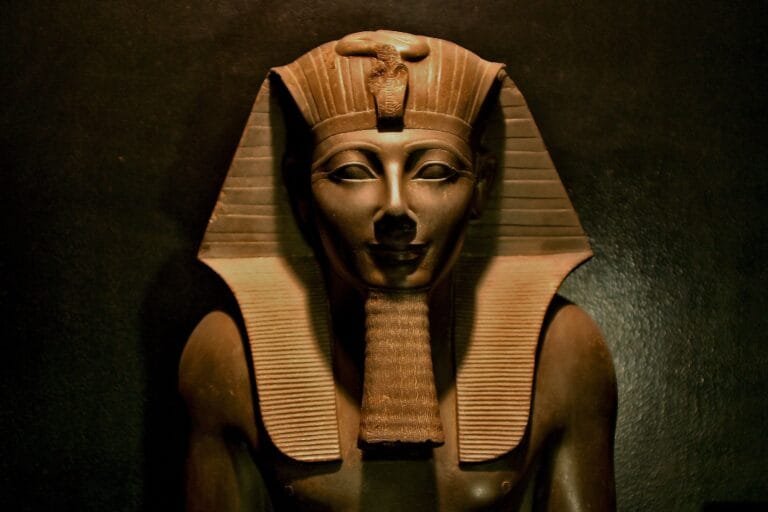
Cairo, Egypt – The book “Pharaohs For Whom?” has sparked wide interest in cultural and historical circles, as it presents a different vision of the history of preserving Egyptian heritage. The book highlights the pivotal role played by Egyptians in protecting their country’s antiquities, in contrast to Western narratives that have focused for decades on the contributions of foreign explorers and missions while ignoring the authentic national role in this file.
The book reviews the stages of archaeological discovery since the nineteenth century, explaining that excavation and preservation work was not limited to foreigners. Egyptian archaeologists, engineers, restorers, and workers effectively participated in discovering, documenting, and saving invaluable archaeological treasures, making them essential partners in preserving an essential part of humanity’s memory.
Development of Legislation and National Sovereignty over Antiquities
The book points out that global interest in Egyptian civilization led in previous periods to the export of thousands of artifacts out of the country, taking advantage of weak legislation at the time. However, the Egyptian state later worked to develop an integrated system to protect its heritage, through issuing strict laws to combat smuggling and regulate excavation work, and establishing specialized national institutions to manage and maintain historical sites.
The book also deals with the development of Egyptology locally, as Egyptian archaeologists have proven high scientific competence in managing the most important museums and sites. These experts contributed to accurate restoration and documentation work using the latest scientific means, which helped protect temples, tombs, and rare collectibles from decay and the factors of time, thereby strengthening Egypt’s sovereignty over its history.
The Epic of Saving Nubia and Efforts to Recover Antiquities
The author dedicates a special space to talk about the Nubian antiquities rescue project in the sixties, which is considered one of the largest heritage preservation projects in history. Despite broad international cooperation, the book confirms that Egyptian expertise was the main and active element in the success of the temple relocation operations and protecting them from drowning after the construction of the High Dam, serving as irrefutable evidence of national capability.
Regarding the file of recovering smuggled antiquities, the book discusses the continuous Egyptian efforts through legal and diplomatic tracks and international cooperation. The author confirms that recovering these pieces is not just a technical process, but is an integral part of the battle to preserve the national identity and protect the cultural heritage of the Egyptian nation.
A Call to Re-read History with Balance
The book concludes that Egyptian civilization was not preserved solely thanks to foreign efforts; Egyptians throughout generations had an authentic role in discovering their ancestors’ antiquities, maintaining them, and presenting them to the world. The work presents a direct invitation to re-read the history of archaeology in Egypt in a more balanced way, one that does justice to Egyptian competencies and highlights their historical role in protecting the greatest civilizational legacy in the world.