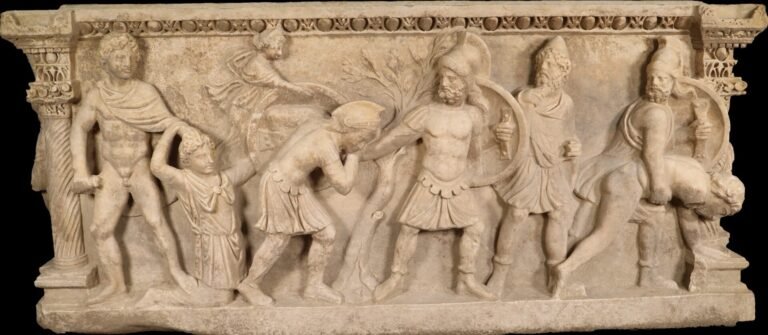
Rome, Italy – The Colosseum in the Italian capital, Rome, is hosting a prominent archaeological and cultural exhibition featuring more than 200 rare artifacts dating back to the civilizations of ancient Troy and Rome.
This exceptional event aims to highlight the deep historical and mythological ties that connected the Greek and Roman worlds throughout the ages.
Artifacts Reflecting Social and Mythical Life
The exhibition showcases a diverse collection of archaeological finds, including everyday tools, statues, manuscripts, and pottery pieces that reflect the intricate details of social and religious life in ancient times.
Additionally, the exhibition includes artifacts linked to the myths immortalized by Greek epics, most notably the “Iliad,” which is associated with the events of the famous Trojan War.
Exhibition organizers emphasized that this cultural event is part of the Colosseum Museum’s efforts to present a modern reading of ancient history by integrating archaeological discoveries with the literary and mythical narrative that formed an important part of the Mediterranean’s cultural identity.
Promoting Awareness of Human Heritage
Organizers noted that hosting this exhibition also aims to raise public awareness about the importance of preserving shared human heritage.
The exhibition provides an opportunity for visitors to closely observe the development of ancient civilizations and how they interacted and exchanged cultural and intellectual ideas over the centuries.
The exhibition is receiving widespread attention from researchers and classic history enthusiasts, as it allows for a precise comparison between the features of Roman and Greek civilizations, revealing the historical entanglements that influenced the formation of ancient Europe’s identity.
Expected Public Turnout
The Colosseum administration expects the exhibition to attract thousands of visitors during its run, given the immense significance of the displayed pieces and their connection to mythical stories that remain globally popular today.
Famous figures from the Trojan War, such as Achilles, Hector, and Paris, continue to capture the public’s passion to explore the details of this era.
Archaeology specialists believe that such exhibitions contribute to reviving interest in ancient civilizations, presenting them in an interactive manner that combines precise scientific research with engaging cultural narratives, thereby enhancing the public’s understanding of the roots of human history.