
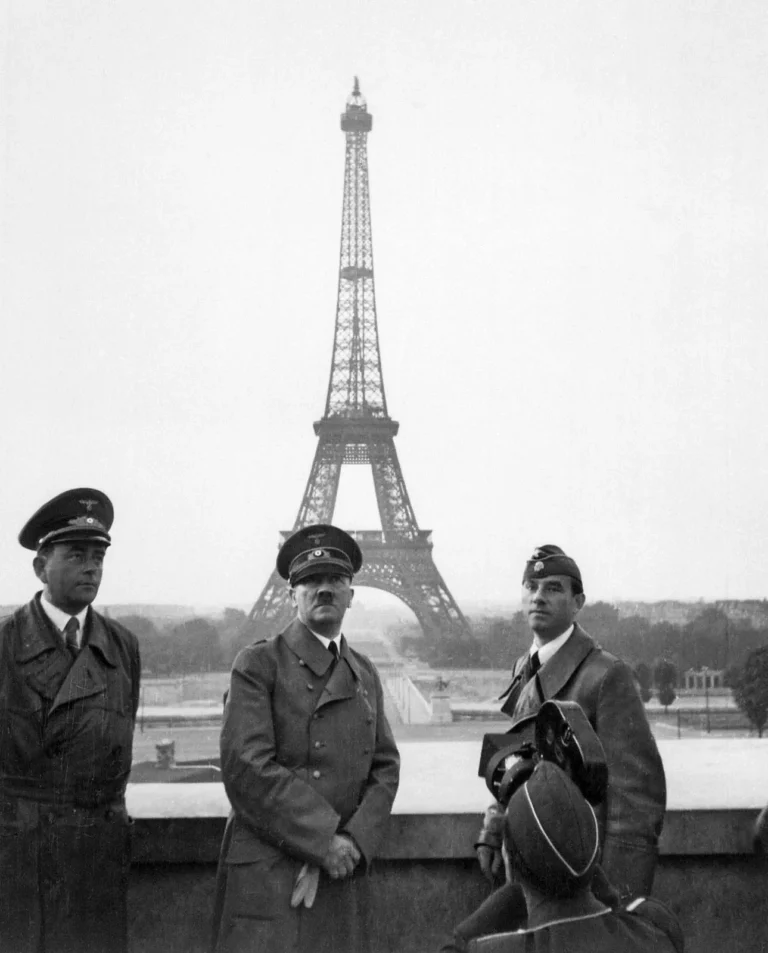
Paris, France – The anniversary of the Nazi forces’ entry into the French capital in June 1940 is one of the harshest moments in European history. Consequently, the fall of Paris into the hands of Adolf Hitler’s army came as a global shock, following the rapid and unexpected collapse of French defensive lines. Moreover, German forces relied on the “Blitzkrieg” strategy, characterized by speed and deep penetration with tanks and air support. As a result, French and British forces were left in a state of total confusion. Thus, the path was paved for Nazi forces to advance into the heart of France without significant military resistance.
Military-Political Collapse and the Pivotal Decision
Rapid German progress across northern France led the French government to flee Paris on June 10, 1940. Accordingly, this move reflected the scale of the stifling military and political crisis at the time. In addition, the French leadership made the decision to declare Paris an “open city” to avoid the total destruction of historic buildings. Conversely, this decision enabled German forces to enter the city on June 14, 1940, without street battles. Consequently, the Nazi flag was raised over government buildings, starting a dark phase of occupation that lasted until 1944.
Years of Occupation and Historical Liberation
Throughout the occupation, Paris was subjected to strict German military administration that imposed wide restrictions on residents. On the other hand, that period witnessed arrests and deportations that affected various segments of French society. Consequently, the fall of Paris remains a landmark in global memory regarding World War II. Ultimately, the capital was liberated in August 1944 by Allied forces and the French Resistance. Accordingly, Paris regained its status as a capital of culture and politics after four years of oppression, while the events of 1940 remained a harsh lesson in modern military and political history.