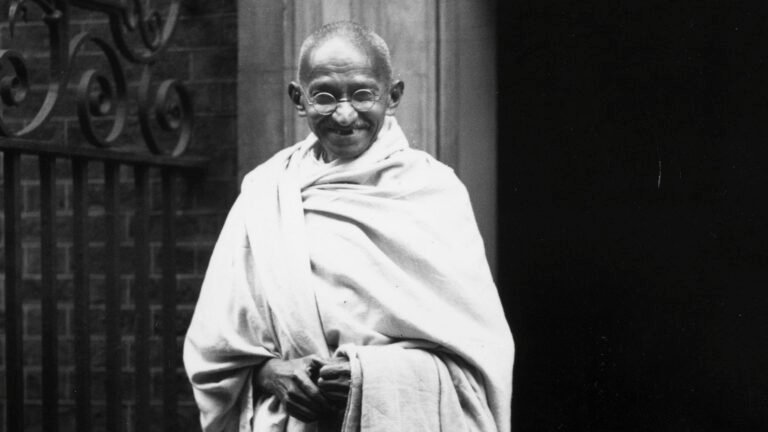
New Delhi – In a new wave of “digital controversy,” the name of the late Indian leader “Mahatma Gandhi” topped social media platforms due to a viral story claiming an emotional encounter with a woman who told him, “I love you.” Obviously, as of May 2026, this story—despite its charm—completely lacks historical documentation. This has opened a broad debate on the phenomenon of “digital myth-making” and how historical icons are used to create “trending” content far removed from reality.
“Philosophy or Fabrication?”: Behind the Viral Tale and the Lack of Evidence
The viral narrative claims that Gandhi responded to the expression of admiration with a philosophical reply calling for purity and peace, leading some to believe it as it aligns with his ascetic persona. Accordingly, internet users split between those admiring the symbolism and skeptics viewing it as mere “digital fiction.” Clearly, the absence of a verified source places this incident in the basket of “digital hallucinations” that dramatically recycle the stories of great figures to drive engagement.
“The Attractive Content Trap”: How Social Media Swallows Historical Facts
Digital media experts warned against the rapid sharing of such tales without verification, asserting that “impactful” stories spread much faster than raw facts. As a result, it has become difficult for the average user to distinguish between fact and myth amidst increased automated resharing. In this landscape, user awareness remains the last fortress against the “falsification of historical memory,” emphasizing that a figure like Gandhi, with his human stature, does not need fabricated stories to enhance his global legacy.