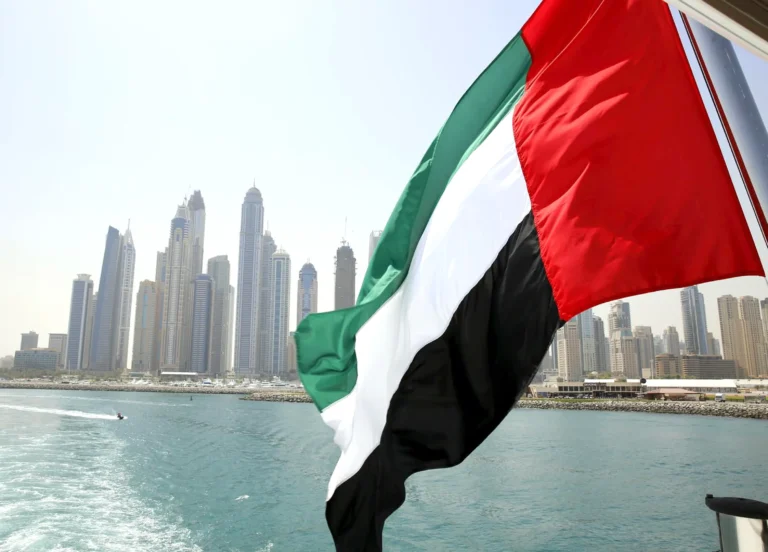
Abu Dhabi, UAE – The United Arab Emirates has reaffirmed its unwavering commitment to not allowing its airspace, territory, or territorial waters to be used for any military operations targeting the Islamic Republic of Iran,
emphasizing its adherence to a policy of de-escalation and support for regional stability.
This stance is in line with the UAE’s foreign policy, which is based on respect for the sovereignty of states, non-interference in their internal affairs,
and the rejection of the use of its territory, airspace, or territorial waters for any military operations that could threaten the security or stability of the region.
serious repercussions
The UAE stressed that the security of the Arabian Gulf is an integral part of its national security,
and that maintaining regional stability requires prioritizing dialogue and diplomacy, and avoiding military confrontations
that could have serious repercussions for the peoples and economies of the region.
Official sources confirmed that the UAE continues to work with its regional and international partners
to support political solutions to existing crises,
and to encourage peaceful paths that ensure maritime security, the stability of energy markets, and the protection of
the common interests of the countries of the region.
This Emirati affirmation comes amid escalating regional tensions and fears of widening conflicts in the Middle East,
particularly given repeated warnings about the repercussions of any direct military confrontation on regional and international security.
In this context, the UAE reiterated the importance of adhering to international law, the UN Charter, and the principles of good neighborliness.
balanced policy
The UAE also renewed its call for addressing disputes through diplomatic channels
and activating regional dialogue mechanisms to build mutual trust
among the countries of the region and reduce the potential for escalation.
Observers believe that the UAE’s position reflects a balanced policy aimed at shielding the country
from the repercussions of regional conflicts and strengthening its role as a supporter of stability and peace,
at a time when the region is facing complex security and political challenges that require rational and responsible approaches.