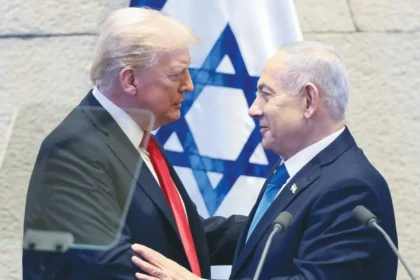
Washington, USA – The American website Axios revealed that Israeli Prime Minister Benjamin Netanyahu discussed with US President Donald Trump,
during a meeting held on Monday, the possibility of launching a new strike against Iran in 2026.
This is according to a US official and two other sources familiar with the details of the meeting.
According to the report, both Trump and Netanyahu believed that
the 12-day military confrontation with Iran last June had achieved its objectives.
However, Netanyahu stressed during the meeting that merely carrying out those strikes might not be enough.
He warned that Tehran was seeking to rebuild its nuclear and missile capabilities,
which could prompt a new round of attacks.
Iran’s attempt to revive its nuclear program
Axios quoted Trump as saying, after the meeting, that the United States
would destroy any Iranian attempt to revive its nuclear program.
While simultaneously emphasizing his preference for reaching a new nuclear agreement with Tehran.
A US official explained that Trump might support a “second round”
of strikes if real and verifiable evidence became available.
This is regarding the rebuilding of the Iranian nuclear program,
but he pointed out that the disagreement lies in defining what constitutes actual rebuilding.
The report noted that Trump’s repeated statements about “destroying”
Iran’s nuclear program make it politically difficult to justify a new strike at the present time.
Growing Israeli concern
While previous US strikes have focused on nuclear facilities, Israel has also targeted conventional military capabilities.
In particular, ballistic missiles, amid growing Israeli concern about the rebuilding of this arsenal.
During the meeting, Netanyahu also discussed concerns related to Iran’s missile program.
In addition to Hezbollah’s attempts to rebuild its missile capabilities in Lebanon.
According to the sources, no agreement has been reached on a timetable
or clear red lines regarding possible military action.
In response, Iran warned that it would respond “harshly” to any new attack,
while its foreign minister called for a return to the path of negotiation.
Observers believe that the risk of a new confrontation could stem from mutual miscalculation.
This is in a region that still suffers from fragile stability after years of successive crises.