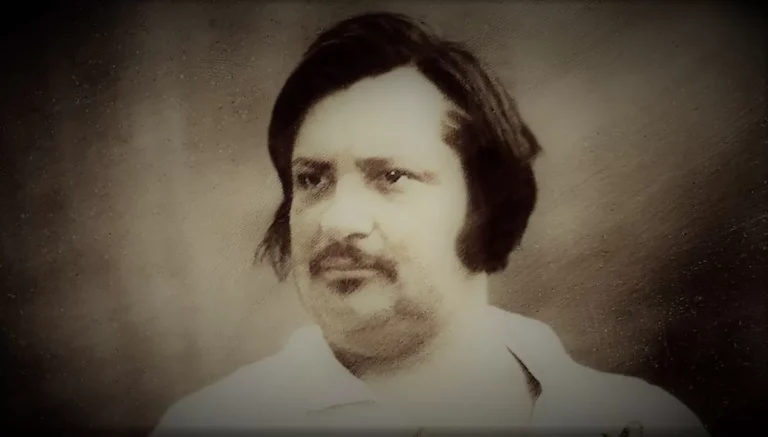
Paris – France: Honoré de Balzac is considered one of the greatest writers in the history of France and the world, having succeeded in building an exceptional literary project that left a profound impact on the trajectory of the modern novel, delivering works that tackled the details of human society with a precision that keeps his name strongly present in literary memory to this day.
Balzac was famous for his monumental work, “The Human Comedy” (La Comédie Humaine), which is considered one of the most dazzling and influential novelistic projects in French literature. It was not merely a single novel, but rather an integrated literary universe comprising dozens of interconnected novels and stories that examined the lives of various social classes in meticulous detail.
“The Human Comedy” and the Portrait of 19th-Century French Society
Through this grand work, Balzac painted a broad picture of 19th-century French society, reviewing issues of money, power, ambition, class struggle, and human relationships, presenting complex characters that resembled reality in a striking manner.
The Realist Style and the Depth of a Border-Transcending Literary Legacy
The French writer relied on a realist style that made his characters appear as though they lived outside the pages of books, granting his works a vast humanitarian dimension and prompting many critics to consider him one of the pioneers of the realist school in world literature.
Balzac’s literary legacy continues to enjoy a widespread presence in universities and critical studies around the globe. Specialists believe that his influence transcended the boundaries of French literature to reach generations of writers who drew inspiration from his methods of character building and sketching the details of human societies.