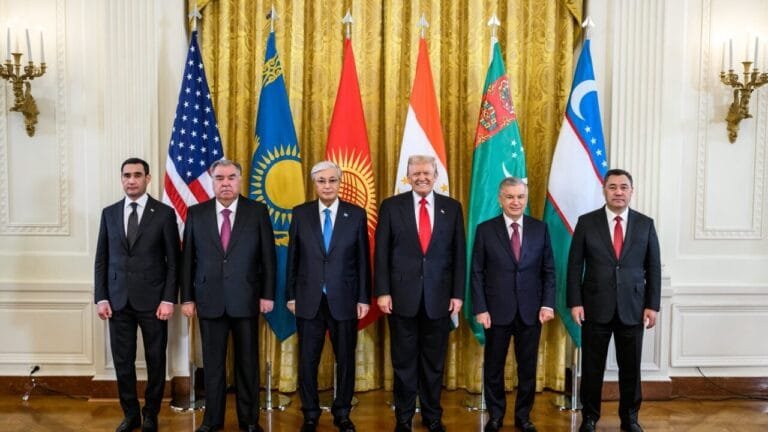
Washington, DC – Amid regional and international shifts, Central Asia is gaining increasing importance on the global political map. For this reason, the United States is working to strengthen its position in the region through frequent visits, sending investment missions, and appointing a special representative to deepen cooperation with the countries of the region.
Aynur Tokumova, an expert at the KazISS Institute, discussed the main reasons behind the growing US interest in Central Asian countries. She noted that this US approach is not a short-term move, but rather part of a long-term strategy to ensure an active presence in regional affairs, particularly concerning issues related to Iran and the implementation of important agreements with regional states.
Aynur Tokumova, an expert at the KazISS Institute, discussed the main reasons behind the growing US interest in Central Asian countries. She noted that this US approach is not a short-term move, but rather part of a long-term strategy to ensure an active presence in regional affairs, particularly concerning issues related to Iran and the implementation of important agreements with regional states.
She added that Kazakhstan was the first Central Asian country to sign a strategic partnership agreement with the United States in 2018, highlighting its role as a pivotal center in US-Central Asian relations.
She noted that the US president’s visit to the region may be scheduled soon. However, the most important thing is the concrete agreements that will be reached during the trip. The country visited first is not crucial.
According to political analyst and international expert Razat Tassim, modern foreign policy is characterized by what is known as “the erosion of sovereignty.” In this context, the influence of both international and non-international actors on the global stage is increasing, posing challenges for governments in implementing policies that reflect the interests of their people.
Tassim explained that Kazakhstan has adopted a pragmatic, multi-pronged approach to ensuring national security. This approach strengthens international partnerships, earning it the trust of both the international and domestic communities.
He noted that the multiplicity of diplomatic channels and alliances has helped maintain overall stability. Any attempt to steer Kazakhstan’s policies toward a single state or exert unilateral influence faces strong internal opposition. This reflects the strength of the country’s balanced approach.