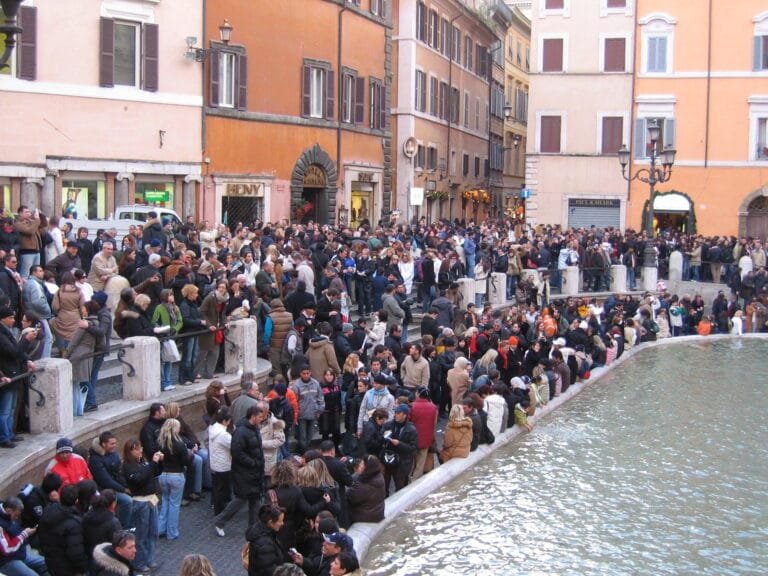
Europe – In an unprecedented move to combat the effects of overtourism, several European countries, most notably Italy and France, have begun imposing strict restrictions on tourist flow to their most prominent landmarks. These sites include the Trevi Fountain in Rome and the Louvre Museum in Paris. European media have described this as “Europe’s war on overcrowding and unregulated tourism.”
These measures come after years of chaos and unprecedented overcrowding, which negatively impacted the quality of the visitor experience and damaged local infrastructure. In Rome, authorities have introduced new entrance fees to popular sites such as the Trevi Fountain and Vatican City. In addition, entry times have been regulated, and the number of daily visitors has been reduced. In Paris, the Louvre Museum has announced a mandatory advance booking system. Fines have also been imposed on visitors attempting to enter without a reservation, in an effort to control the overcrowding that has reached record highs in recent years.
European officials justify these measures as necessary to preserve historical and artistic sites and reduce pressure on major cities that have suffered from the effects of unregulated tourism on citizens’ daily lives, such as rising prices and the disappearance of local housing. They also see this move as an opportunity to promote sustainable tourism, which takes into account the environment and the carrying capacity of historical sites.
However, these moves have not been without controversy, as some experts believe they could negatively impact local economies dependent on tourism. They argue that imposing additional fees could reduce the flow of visitors, especially from low-income countries. This presents European governments with a dual challenge: preserving heritage while ensuring the sustainability of the tourism economy.
Ultimately, it seems that Europe is entering a new phase of tourism management. Ancient cities are transforming from simply open destinations for everyone into regulated and designated areas. Thus, Europe is striving to strike a balance between protecting cultural and historical heritage and preserving the local economy amidst a relentless global wave of travel and tourism.