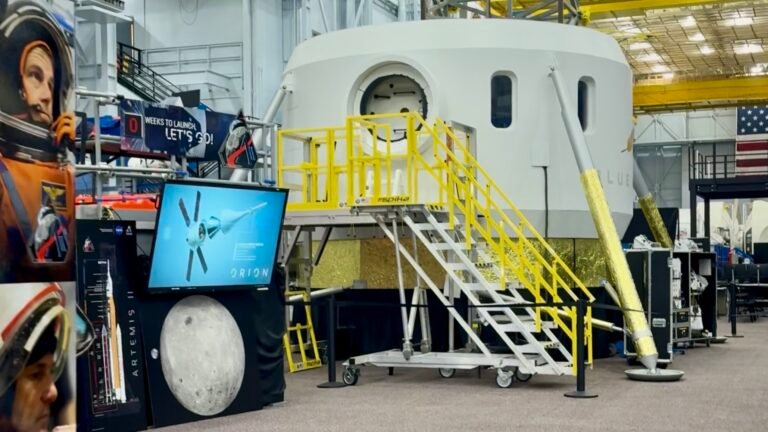
Florida, USA – Specialized aerospace agencies have unveiled an innovative lunar rover named “Griffin,” designed to be a cornerstone in plans to establish a permanent human base on the lunar surface. Consequently, this vehicle will undertake the task of transporting heavy equipment and cargo between landers and construction sites, enhancing long-term exploration capabilities. Moreover, “Griffin” is designed to operate efficiently in the harsh lunar environment, including extreme temperatures and sharp lunar dust. As a result, this technology will help reduce reliance on frequent supply missions from Earth. Thus, “Griffin” represents a qualitative leap toward establishing a sustainable human presence on the lunar surface in the coming years.
Technical Capabilities to Face Lunar Challenges
The rover features advanced capabilities that allow it to move flexibly across uneven terrain, which is vital for the success of any scientific base. Accordingly, this step is part of broad international alliances aiming to build housing units, scientific laboratories, and power stations on the lunar surface. In addition, experts believe that developing independent transport systems is the decisive element in the success of space colonization projects. Conversely, the international arena is witnessing an acceleration in investments directed toward landing technologies and resource extraction. Consequently, competition to develop advanced technology for operation on the lunar surface has become a top priority for space agencies and private companies.
Toward New Horizons in Space Exploration
These developments mark the beginning of a historical phase that could transform the Moon into a launchpad toward distant planets in the solar system. On the other hand, scientists emphasize that a long-term human presence on the lunar surface will pave the way for unprecedented scientific discoveries. Consequently, succeeding in building sustainable infrastructure will reshape our understanding of space exploration. Ultimately, “Griffin” represents a human commitment to reaching beyond the borders of our planet. Accordingly, the coming decades will witness radical transformations in how we utilize resources and interact with the environment on the lunar surface to serve humanity’s goals in outer space.