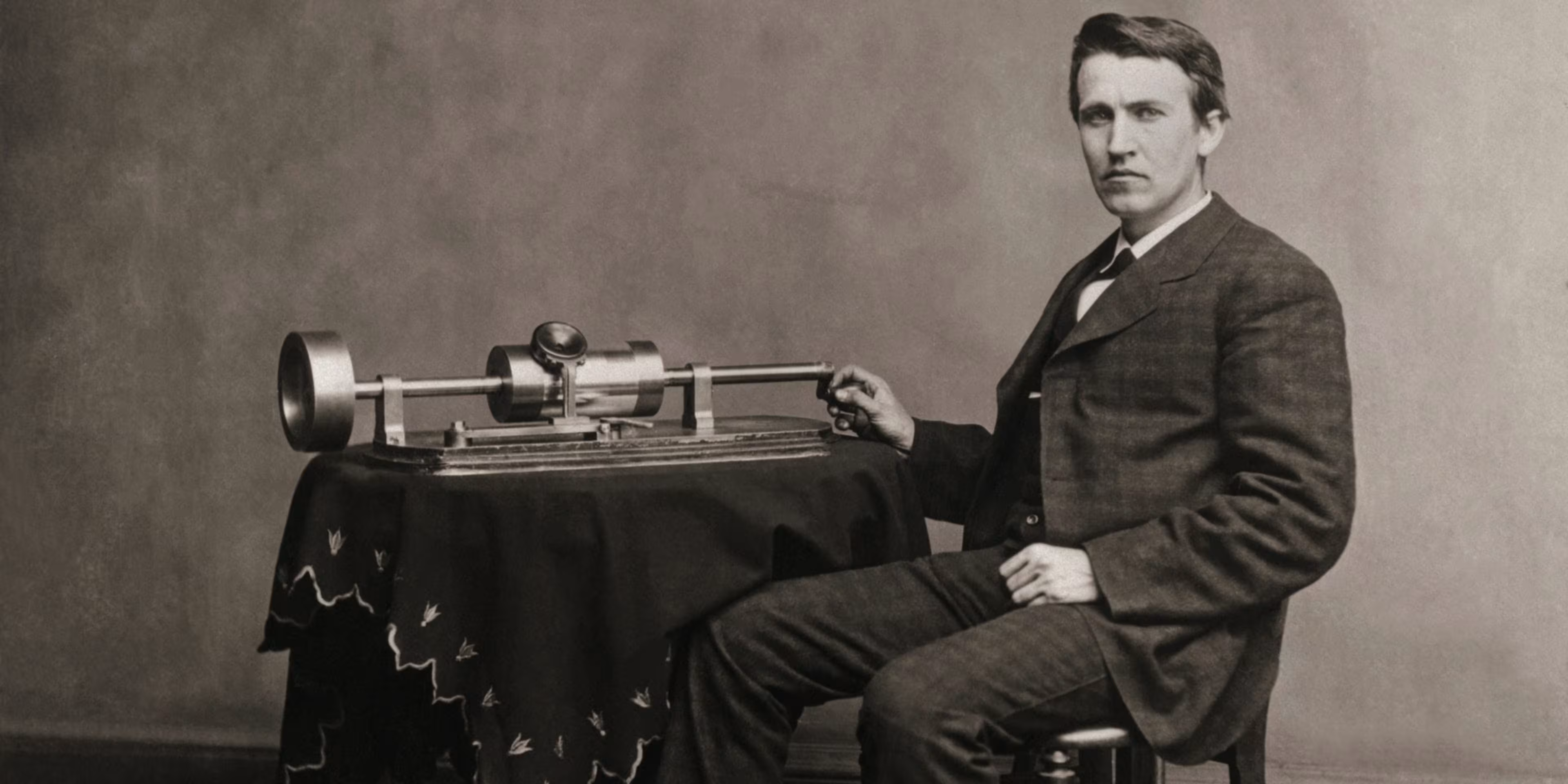
New Jersey, USA – In a moment that altered the course of human technology, the American scientist and inventor Thomas Edison succeeded in creating the first device capable of recording and playing back sound, known as the “phonograph.” Consequently, this innovation laid the foundation for a new era in communications and audio documentation. Moreover, the device relied on an ingenious concept of converting sound waves into precise vibrations recorded on a rotating cylinder, before converting them back into audible sound. As a result, the experiment appeared to defy the laws of nature at the time. Thus, Thomas Edison cemented his place in history as the first to make sound recordable and repeatable in the 19th century.
A Turning Point in Human History
Science historians believe that Thomas Edison‘s invention was not merely a technical device, but a major turning point in human civilization. Accordingly, it opened the door to preserving historical speeches and documenting events in a way that was previously impossible. In addition, the phonograph paved the way for the development of entire industries, most notably music recording and broadcasting, leading all the way to the modern digital techniques we rely on today for audio storage and playback. Conversely, Edison’s influence transcended science to touch culture, art, and media. Consequently, human communication shifted from “fleeting speech” to content that could be preserved and reproduced across generations.
Redefining the Relationship Between Humans and Sound
Thomas Edison‘s invention sparked a true cultural revolution, making the auditory experience something that could last forever. On the other hand, this invention remains one of the most significant milestones in the history of innovation, as it redefined the relationship between humans and sound. Consequently, sound was transformed from a momentary occurrence into something that could be summoned at any time. Ultimately, credit is due to Thomas Edison for breaking the chains of time that once prevented the voices of the past from reaching the future. Accordingly, we continue to benefit to this day from this great legacy that began with a rotating cylinder that changed the world forever.