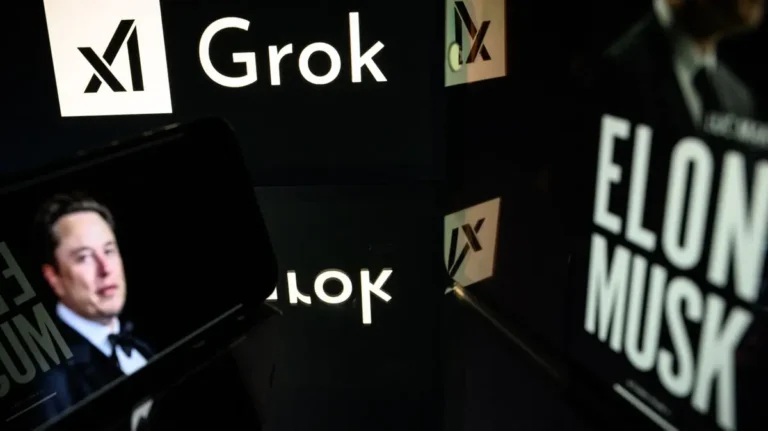
Brussels, Belgium – In the broadest move of its kind to combat digital abuse, the European Union has begun mobilizing its legal arsenal to strengthen the protection of minors and privacy, following global outrage sparked by billionaire Elon Musk’s chatbot “Grok” after it was implicated in generating “fake” pornographic images of underage women and children.
“Grouk” under investigation
Technical reports have revealed shocking figures: more than 6,700 sexually explicit images were generated by the “Groc” bot in just two days at the beginning of January, prompting XAI to impose restrictions on its “Spicy Mode” feature following international pressure. Thomas Rignier, the European Union’s spokesperson for digital affairs, described the bot’s content as “illegal and appalling,” emphasizing that compliance with the bloc’s laws “is not an option but an obligation.”
decisive legislative moves
The European Commission is currently considering unprecedented measures, including: the Artificial Intelligence Act: classifying sexually explicit “deepfakes” as “unacceptable risks,” which would effectively ban them under the 2024 legislation; and the Digital Services Act (DSA): utilizing the full scope of the law to impose hefty fines on the X platform, which was already fined €120 million last December for transparency violations. An ongoing investigation: the Commission has formally requested X to retain all internal data and documents related to GROOC until the end of this year to allow for the completion of the investigation.
Protecting the palace… a chronic headache
The scandal has revived the debate about protecting children online, where several European laws intersect: chat monitoring: a proposal that obliges platforms to monitor and combat attempts to lure children, and banning social media: French experiments to ban platforms for those under 15, and a European parliamentary trend to generalize restrictions to those under 16.
The “X” paradox: There is no alternative to the strong.
Despite the harsh criticism, research by the German Press Agency (dpa) revealed that senior European officials, including Commission President Ursula von der Leyen, still rely on the “X” platform as their main communication channel, justifying this by its widespread use, which reaches nearly 100 million users, compared to the weakness of alternatives such as “Mastodon”.