
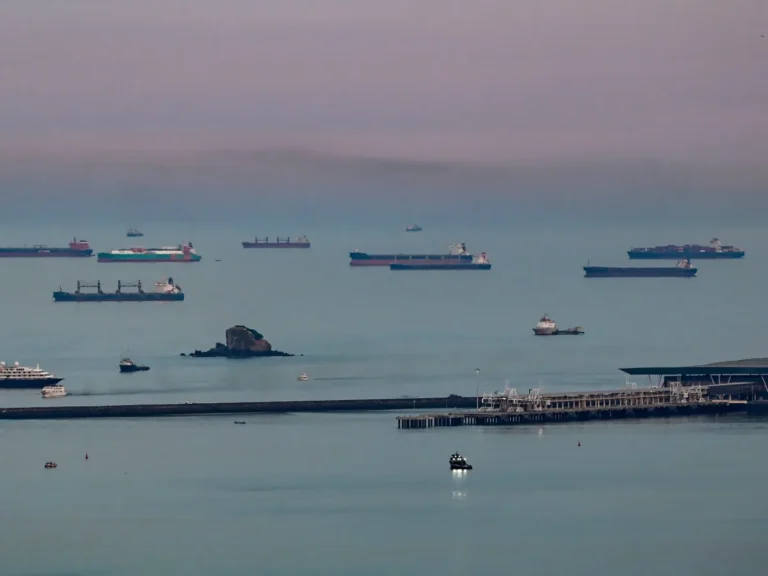
Tehran, Iran – Shipping traffic through the Strait of Hormuz saw a significant decline this week. This comes as global and Arab markets await the outcome of diplomatic talks between Iran and Oman. The talks aim to find a settlement and positive indicators for reopening this vital waterway to international shipping without restrictions.
Official data confirms a decline in maritime shipping traffic.
The latest reliable economic data shows that shipping traffic through the Strait of Hormuz has plummeted to just 33 vessels between Monday and Thursday of this week. This is a stark contrast to the approximately 50 vessels during the same period last week. This decline reflects the heightened caution prevailing in the maritime transport sector. In addition, energy market participants await developments in the regional political landscape.
Transit traffic details and Kepler data
According to data from the maritime analytics firm Kpler, the transit traffic recorded limited details including the following:
Four ships crossed the strait just one day earlier, including a very large crude oil tanker called Nissos Kea.
The huge ship carries about two million barrels of Basra crude oil that were pre-loaded from Iraqi ports.
The remaining vessels were limited to two tankers loaded with liquefied petroleum gas. In addition, there was one small bulk cargo tanker.
Kpler’s data also revealed that only six crude oil tankers left the waterway this week.
So far, 21 ships have entered the strait, with most of them crossing via the Iranian route.
Owners’ concerns and Chinese and Indian refining offers
Meanwhile, informed sources in the maritime shipping sector reported that several major refineries in both China and India submitted requests this week to charter and insure vessels capable of navigating the Strait of Hormuz. Their aim is to load crude oil directly from the Basra oil terminal in Iraq. They want to take advantage of the significant discounts offered. However, these same sources confirmed that no actual contracts for vessels have yet been finalized or confirmed. This is attributed to a prevailing sense of fear and deep anxiety among ship owners. In particular, commercial fleet operators are concerned about the risks of sailing through this strategically vital waterway.
The importance of the Strait of Hormuz in global trade
The Strait of Hormuz is one of the world’s most important energy chokepoints, through which a significant portion of global crude oil and petroleum product supplies pass en route to Asian and Western markets. Meanwhile, investors remain focused on the outcome of the ongoing talks between Oman and Iran. They seek to assess the potential impact on oil prices and supply security in the coming period.