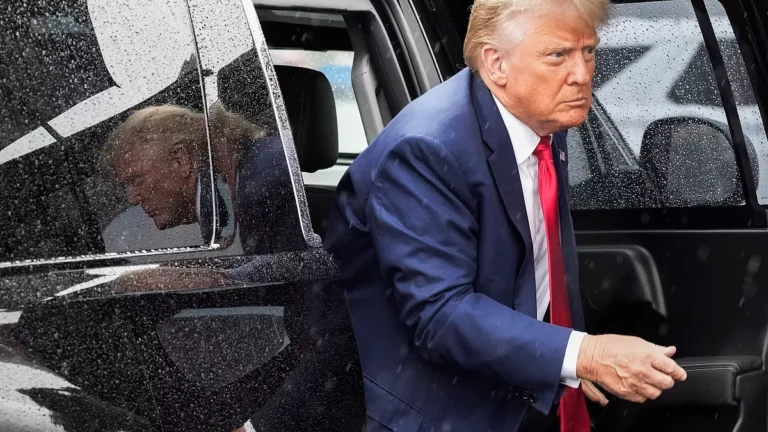
Washington, United States – US President Donald Trump strongly defended the military operations carried out by the United States against Iranian targets, stressing that these moves came as a necessary and deterrent measure in response to the downing of an American Apache helicopter over the vital waters of the Strait of Hormuz.
In his first direct comment since the start of operations, President Trump said during a phone call with Jonathan Karl, ABC News’ chief correspondent in Washington, saying: “I think the response is absolutely necessary. They shot down a helicopter, and now we are responding.” In his speech, Trump stressed his adoption of a forceful approach in dealing with threats, stressing: “I believe in a firm response. I have always believed that throughout my life.”
The US president indicated that an agreement was in place, expressing his hope that it could continue, but at the same time he stressed that the recent Iranian transgressions had imposed a new reality, explaining that the American response was “very strong and effective” to match the scale of what he described as the aggression, in reference to the targeting of the American helicopter last night.
Trump’s statement aligns with the official announcement from U.S. Central Command (CENTCOM), which confirmed the commencement of what it described as “precision defensive strikes” against targets inside Iran.
CENTCOM explained that these operations were carried out under the direct command of the U.S. military commander-in-chief, in response to what it deemed “unprovoked Iranian aggression” in the form of the downing of a U.S. military attack helicopter.
These statements and military movements on the ground have left the region in a state of extreme anticipation and caution, as Washington puts its military weight into what it describes as “self-defense,” stressing its determination to protect its forces, vital interests, and international shipping lanes from any future threats, in light of the ongoing military confrontation that raises widespread international concerns about things sliding towards a more dangerous regional escalation, which puts the stability of navigation in the waterways to a real test in the coming days.