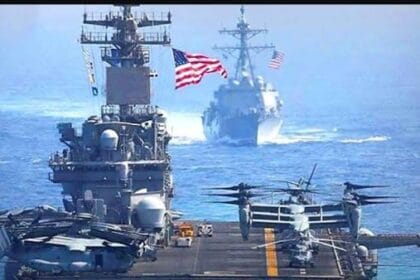
Washington, United States – An extensive report published by the Associated Press, citing officials and prominent regional experts, has revealed that Iran is increasingly relying on its regional proxies. These proxies—comprising the Yemeni Houthi group and Iraqi militias—are escalating military and political pressure on Saudi Arabia and U.S. allies in the Arabian Gulf region.
Joint operations room and coordination of energy attacks
The intelligence report indicated that clear signs had been detected confirming increasing direct field coordination among Iran-allied fronts.
The Associated Press reported that, through these coordinated operations, Tehran aims to increase the economic and political cost of the regional conflict that has been ongoing since March. Concurrently, the Houthis have escalated their attacks, targeting Saudi energy infrastructure and global energy supply routes. According to statistics cited in the report, the Houthis have launched more than a dozen missile and drone attacks against oil facilities and maritime tankers since late July. Furthermore, they announced the imposition of an arbitrary blockade on Saudi maritime traffic in the Red Sea.
Academic warnings that Riyadh is running out of patience+
For her part, Elisabeth Kendall, a leading expert on Yemeni affairs at Girton College, University of Cambridge, commented on these developments by noting that the Saudi government currently demonstrates a clear desire for restraint and an intention to avoid being drawn into launching another direct, large-scale military offensive against the Houthis. However, Kendall warned that the continuation of these systematic attacks and the group’s persistent threats to the Kingdom’s assets could ultimately compel Riyadh to abandon its policy of de-escalation and respond with decisive military force. She further emphasized that the Kingdom “must act firmly and decisively” to safeguard its national security and economic stability should these regional provocations persist.