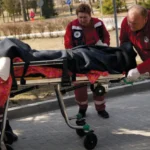
Damascus, Syria – Syrian state television reported on Friday that two people were killed when a hand grenade exploded unexpectedly in front of the Palace of Justice building in the northeastern Syrian city of Hasakah. The incident has once again highlighted the recent security and social tensions in the region. Syrian security forces and other relevant authorities immediately cordoned off the area and prevented anyone from approaching the blast site. The aim was to ensure the safety of civilians and facilitate the work of rescue and investigation teams. Official sources confirmed that security agencies are conducting a thorough investigation to uncover all the circumstances and motives behind this tragic incident.
A changing political and field context
This incident on the ground comes at a time of significant political and structural transformations in the region. Earlier, Mazloum Abdi, the commander of the Syrian Democratic Forces (SDF), announced the dissolution of the SDF, along with the completion of its full military, security, and administrative integration into official Syrian state institutions. This was intended to affirm that Kurdish rights would be constitutionally guaranteed and that all citizens would abide by the laws of the state. This step culminated an agreement signed on January 29, 2016, between the Syrian government and the SDF. The agreement aimed to end years of division and integrate the institutions of the former Kurdish administration into the Syrian state system.
Signage tensions and local languages
It is worth noting that the Palace of Justice building in Hasakah has recently been at the forefront of local events due to crises and tensions arising from a dispute over the signage at the main entrance. This has been accompanied by demands and objections to the sign being written only in Arabic. Conversely, there are efforts and demands from the Kurdish community to include the Kurdish language alongside Arabic. This reflects the sensitivity of cultural and administrative coexistence during this important transitional phase in the region.