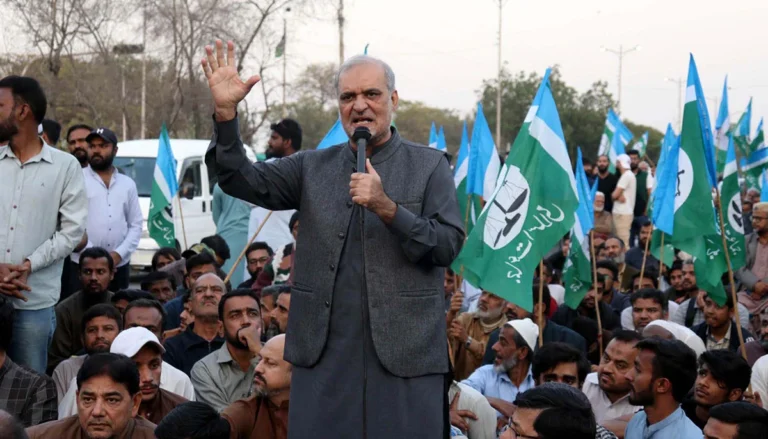
Islamabad, Pakistan – The leader of Jamaat-e-Islami, the Muslim Brotherhood in Pakistan, Hafiz Naeem-ur-Rehman, announced the launch of a new and massive wave of popular protests and sit-ins expected on August 16. These events are to denounce the rise in oil prices and taxes, and the policies of independent power generation stations. Furthermore, they aim to protest the continued privileges of the ruling elite that burden the citizens.
Details of the protests and sit-ins of August 16
During a press conference held at the Jamaat-e-Islami headquarters, Hafiz Naeem-ur-Rehman explained that the protests would take the form of mass sit-ins to be held in front of the residence of the Chief Minister of Punjab and the governors’ residences of Khyber Pakhtunkhwa, Sindh, and Balochistan on August 16. Besides this, the Jamaat leader strongly criticized the government’s tax policies. He stated that authorities had collected approximately 8 trillion rupees from citizens through the petroleum tax. He accused them of turning this tax into an exploitative source of revenue during the Iran-Iraq War. Moreover, Rahman claimed that independent power producers had received enormous sums of money for electricity that was “not actually generated” over the past four years. This, he said, reflects a massive level of financial waste and administrative corruption.
Popular mobilization and broad political support
Referring to previous popular movements, the leader of the Jamaat-e-Islami emphasized that the large public turnout proves beyond any doubt that the Pakistani people are suffering greatly. They are also fed up with the prevailing forms of governance. He stressed, “The Jamaat-e-Islami protects the rights of the people, not personal or political interests, and this injustice against the people must end.”
He reiterated his call to end the excessive privileges granted to the ruling elite and various special interest groups. In addition, he urged young people—especially in Khyber Pakhtunkhwa province—to participate actively and in large numbers in these protests. He also expressed his gratitude to the Pakistan Tehreek-e-Insaf (PTI) party, the Pakistan Peoples Party (PPP), and other political parties that have shown their support and solidarity with the planned sit-ins.
The party’s vision for security and issues in the Khyber Pakhtunkhwa region
On the security front, Hafiz Naeem Rahman stressed that the primary responsibility for maintaining security and public order rests with the government. He affirmed that the people of Khyber Pakhtunkhwa deserve to live in peace and stability. They also deserve to receive their fair and full share of the region’s natural resources and minerals. He noted that providing genuine job opportunities for young people would significantly contribute to resolving the region’s crises. He also addressed the plight of those displaced from the Tirah Valley, criticizing the delays in their return after they were previously promised they would be able to return within a month of the end of military operations. Many months have passed. However, they have yet to return to their homes.
Foreign policy and relations with Afghanistan
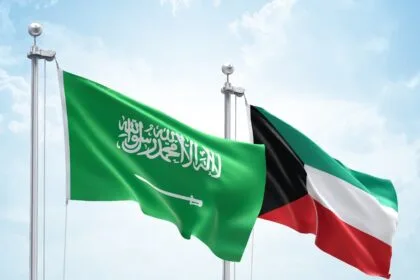
On the diplomatic and regional front, the leader of Jamaat-e-Islami welcomed the “Mecca Defense Agreement,” considering it a pivotal step towards strengthening Islamic unity. However, he also called for expanding participation to include Iran, Malaysia, Indonesia, and other Muslim countries to enhance effectiveness in confronting external threats. Regarding the suspension of trade with Afghanistan, he expressed deep concern about the suffering of traders on both sides of the border. Therefore, he urged the immediate resumption of cross-border trade and the establishment of designated trade zones in coordination with all parties.
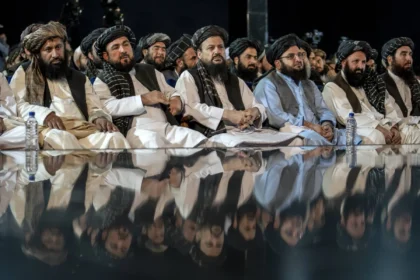
He also urged Islamabad and Kabul to resolve their differences through dialogue, emphasizing his firm rejection of the use of Afghan territory as a launching pad for any terrorist acts against Pakistan. Moreover, he proposed the assistance of Saudi Arabia and Turkey to improve bilateral relations. In the humanitarian and educational spheres, he called for facilitating travel procedures for students, and strongly criticized the Pakistani Medical and Dental Council’s refusal to recognize medical degrees obtained by students studying in Afghanistan.