Gaza, Palestine – The National Committee for the Administration of Gaza welcomed the recent progress made regarding the roadmap and the opening of the path to its implementation, following the announcement by the Peace Council that Hamas had agreed to a detailed roadmap for implementing the phases of the ceasefire agreement in the Gaza Strip.
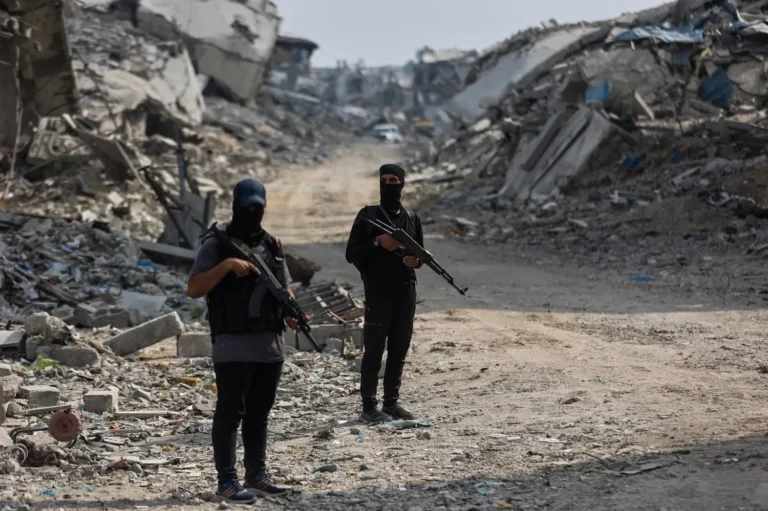
The plan includes the gradual disarmament of Hamas and other armed groups, concurrent with a complete Israeli withdrawal from the Gaza Strip.
In an official statement, the committee considered this development a “significant milestone for our people in the Gaza Strip,” emphasizing that the top priority now lies in translating this progress into tangible steps that citizens can experience in their daily lives after years of conflict and destruction. The committee announced its full readiness to assume its administrative responsibilities, noting that it had completed extensive institutional and operational preparations over the past months to restore essential services, strengthen the rule of law, facilitate the delivery of humanitarian aid, and lead recovery and reconstruction efforts.
Work reference and transitional phase strategy
The committee explained that its work is based on US President Donald Trump’s comprehensive plan for Gaza and UN Security Council Resolution 2803, with the aim of establishing an efficient, transparent, and accountable Palestinian administration operating under “one authority, one law, and one security apparatus.” As implementation begins, efforts will focus on restoring the functioning of public administration institutions, improving humanitarian conditions, and creating a supportive environment for development and economic opportunities.
The Committee stressed that the success of this phase depends primarily on Palestinian national partnership and the integration of roles among national institutions, local bodies, the private sector, and civil society. The Committee will also coordinate fully with the Peace Council, the Office of the High Representative, the International Stabilization Force, and regional and international partners to ensure a supportive environment for the success of its mission. It noted that the reconstruction of Gaza requires a sustained international commitment and substantial resources, and affirmed its commitment to building a safe and stable Gaza based on the rule of law and legitimate institutions to promote the right to self-determination.
Details of the ceasefire agreement and the breach of the Peace Council
For its part, the Peace Council and the mediating countries (Egypt, Qatar, Turkey, and the United States) announced Hamas’s acceptance of the detailed roadmap for a ceasefire, culminating months of intensive negotiations conducted by the parties in good faith. This agreement represents a historic breakthrough as it includes, for the first time, a formal commitment from Hamas to a practical plan for the gradual relinquishment of all its weapons in parallel with the Israeli withdrawal.
The head of the UN Special Coordinating Committee on Gaza, Nikolay Mladenov, confirmed in a post on the X platform that reaching this agreement involved extremely difficult negotiations with critical moments that nearly led to its collapse. He stressed the importance of having genuine and effective implementation and verification mechanisms. He also called for providing political and practical support to the Palestinian people and their transitional institutions, expressing his appreciation for the efforts made by the United States, Egypt, Qatar, Turkey, and the United Arab Emirates, as well as the Security Council’s continued support for Resolution 2803.