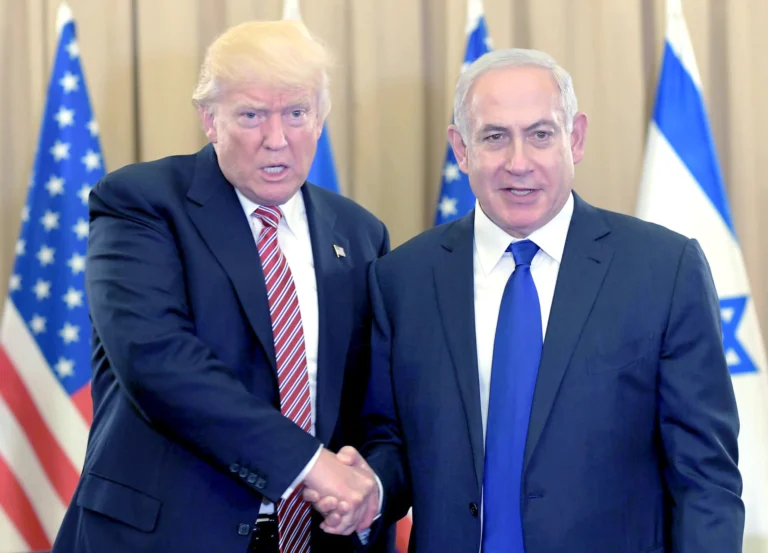
Washington, DC – US President Donald Trump acknowledged differences in vision and objectives between his administration and Israeli Prime Minister Benjamin Netanyahu.
He asserted that Netanyahu adopts more aggressive stances on several regional issues.
This came after understandings and agreements were reached with Iran,
which have sparked extensive discussions within political and security circles.
Special security objectives
Trump explained that the United States views regional issues
rom a broader perspective linked to direct American interests and international stability.
Israel, on the other hand, pursues its own security objectives, which may not always align with Washington’s calculations.
He added that relations between the two countries remain strong.
However, this does not imply complete agreement on all issues.
Trump’s remarks come at a time when the region is witnessing significant
political and security shifts following the recent agreement with Tehran.
This agreement has opened the door to a new phase of understandings concerning regional security and the Iranian nuclear program.
In this context, the agreement has been met with welcome from some parties and reservations from others.
Future of security arrangements
Observers believe Trump remarks reflect ongoing discussions within US decision-making circles regarding how to manage relations with Iran in the coming period.
They also discuss the potential impact on regional balances and the US’s traditional alliances in the Middle East.
It is estimated that the divergence between Washington and Tel Aviv may become more pronounced on issues related to Iran and the future of security arrangements in the region,
especially as the US administration seeks to maintain the current understandings and avoid any steps that could lead to a wider military escalation.
International political circles are closely monitoring the implications of these statements, considering them an indicator of the nature of the next phase in US-Israeli relations.
These circles are also observing the extent of coordination between the two sides on issues of high strategic sensitivity.