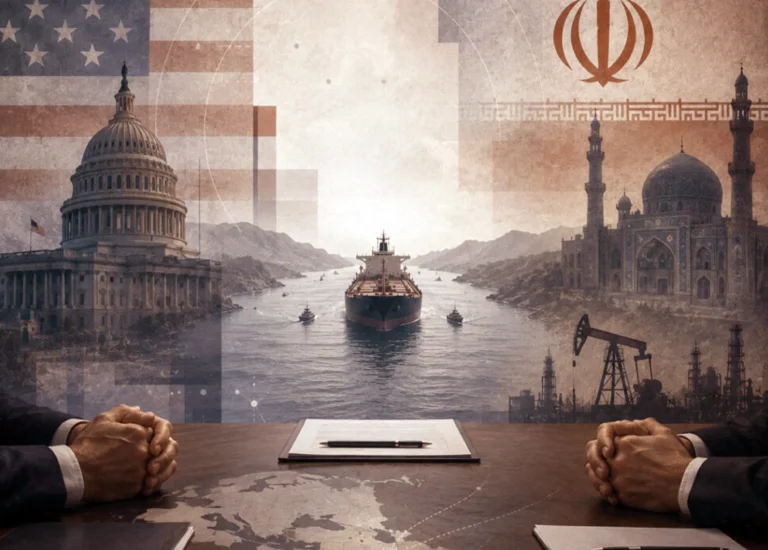
Washington, DC – US President Donald Trump escalated his rhetoric against Iran. He asserted that the United States would not hesitate to use military force.
This would happen if it deemed that Tehran was not adhering to the understandings and agreements reached regarding its nuclear program and related security issues.
Trump’s remarks came during a discussion about the agreement with Iran.
He emphasized that Washington possesses multiple options for dealing with any breach of commitments.
Furthermore, he maintained that safeguarding US interests and the security of its allies in the region remains a non-negotiable priority.
The agreement is an opportunity to achieve stability
The US president indicated that the current agreement offers an opportunity to achieve stability and reduce tensions.
However, he warned that any Iranian attempt to circumvent its commitments or resume activities
that the United States considers a threat to regional security would be met with a decisive response.
These statements come at a sensitive time in US-Iranian relations following understandings
aimed at containing the accumulated disputes between the two countries.
This is particularly true regarding the nuclear program, economic sanctions, and security issues in the Middle East.
Observers believe that Trump statements reflect a policy based on combining diplomacy and pressure.
At the same time, the US administration seeks to preserve the agreement
while simultaneously keeping deterrent measures, sanctions, and military options on the table.
This is done to ensure the implementation of the agreed-upon terms.
Reject the policy of threats and blackmail
For its part, Iran repeatedly affirms its commitment to any agreement reached on the basis of mutual respect and the lifting of economic pressure.
Conversely, it rejects what it describes as a policy of threats and blackmail. In addition, Iran maintains that regional stability requires addressing disputes through dialogue and political means.
Trump’s statements have elicited widespread reactions in political and diplomatic circles. Some viewed them as a warning message directed at Tehran. Meanwhile, others believed they could exacerbate the tension and mistrust that still surround relations between the two countries. This comes despite recent diplomatic efforts.
The international community is closely following developments regarding the US-Iranian agreement. Many hope it will contribute to reducing regional tensions. Meanwhile, many parties warn that any setback in the understandings could return the region to the cycle of escalation and confrontations witnessed in recent years.