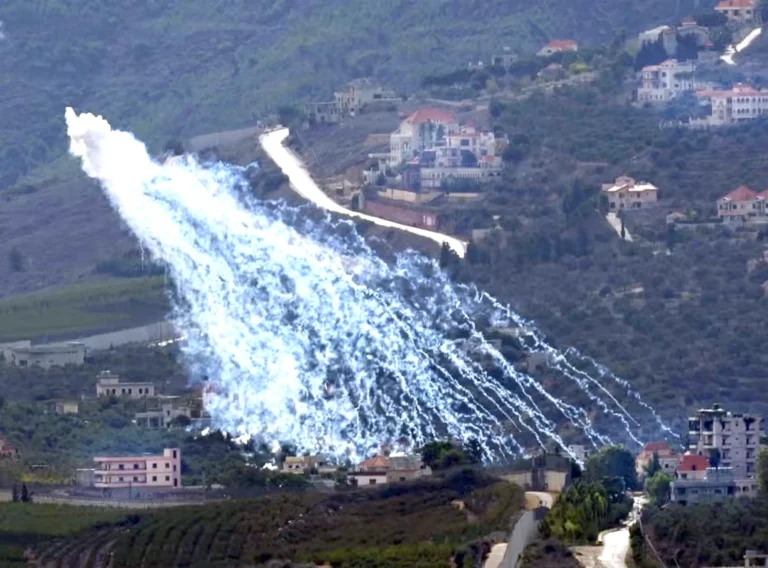
Beirut, Lebanon – The New York Times has revealed visual evidence that it says shows the Israeli military using white phosphorus munitions over populated areas in southern Lebanon during recent military operations in the region.
The newspaper reported that analysis of available photos and videos showed white phosphorus munitions over the city of Nabatieh.
This coincided with an Israeli operation aimed at capturing the strategic Beaufort Castle area in southern Lebanon.
Visual evidence and field analysis
The newspaper reported that a review and analysis of video footage by specialists
revealed indicators consistent with the use of white phosphorus munitions.
Furthermore, it noted that documented scenes showed smoke and burning materials spreading over populated civilian areas.
The report added that the monitoring process relied on videos and photographs taken during the military clashes in the region.
This was done to verify the nature of the munitions used.
Nabatieh is at the heart of the operations
According to the report, suspected white phosphorus munitions were documented falling on
the city of Nabatieh during the Israeli military operation related to the Beaufort Castle (Qalaat al-Shaqif) area.
Beaufort Castle is one of the most prominent high points in southern Lebanon.
This comes amidst ongoing security and military tensions along the Lebanese-Israeli border.
This situation has been accompanied by exchanges of fire and extensive troop movements.
Ongoing controversy surrounding the use of white phosphorus
The use of white phosphorus in populated areas is highly controversial internationally,
given the potentially devastating harm it can cause to civilians and property.
The use of these munitions is also subject to monitoring by international human rights
and humanitarian organizations that track developments in armed conflicts in the region.
The report did not provide details regarding any official Israeli response to the findings of the analysis published by the American newspaper.